
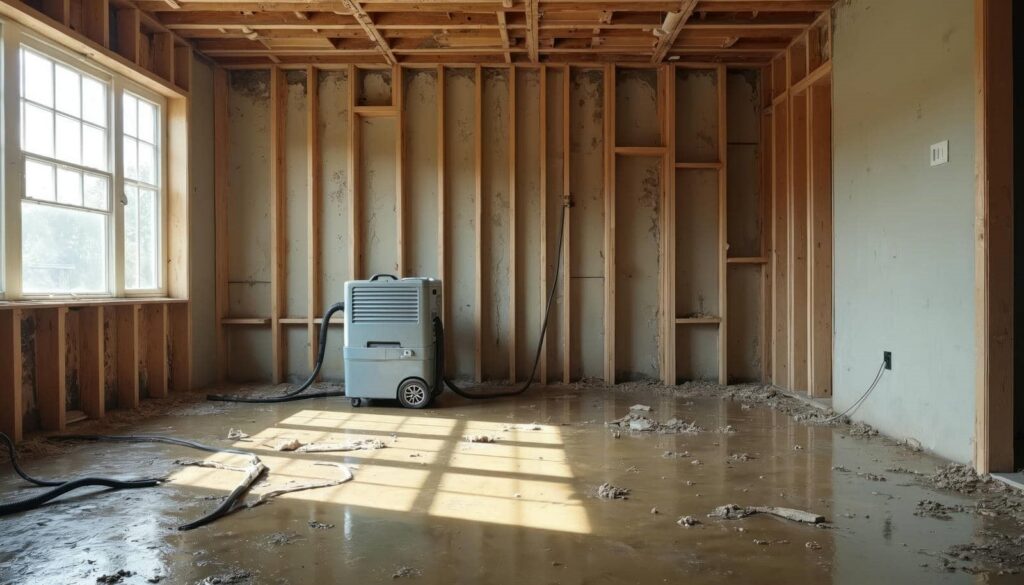
After water damage, the wettest materials are often the ones you can’t see. You need structural drying to remove moisture from framing, subfloors, insulation, and other hidden assemblies before they weaken or support mold growth. Technicians measure moisture, extract standing water, and use air movers and dehumidifiers to control evaporation. The real question is how fast the structure can return to safe levels before damage spreads further.
Key Takeaways
- Structural drying is the process of removing moisture from building materials after water damage to restore safe moisture levels.
- It targets hidden areas like framing, drywall, subfloors, and insulation, not just visible wet surfaces.
- Fast drying helps prevent mold growth, secondary damage, and indoor humidity problems.
- Professionals use water extraction, air movers, dehumidifiers, and moisture meters to control drying.
- Drying time varies from a few days to two weeks, depending on saturation, airflow, temperature, and material type.
What Structural Drying Means After Water Damage
When water damages a building, structural drying means removing moisture from the materials that make up the structure itself, including framing, subfloors, drywall, insulation, and other porous components.
You’re restoring the hidden assemblies that support your space after water damage, not just drying visible surfaces. Technicians measure moisture, assess saturation, and control airflow, temperature, and dehumidification to bring materials back to acceptable levels.
This process protects structural integrity by limiting material swelling, weakening, and distortion. You’ll often see targeted drying in wall cavities, under flooring, and around load-bearing members where trapped moisture lingers.
When you understand structural drying, you can make informed decisions and feel confident that your building is being returned to a stable, serviceable condition.
Why Fast Structural Drying Prevents Mold
Fast structural drying helps prevent mold by removing the moisture that mold needs to grow before colonies can establish on building materials.
You reduce the time porous surfaces stay damp, which limits spore activation and hyphal expansion. When you act quickly, you support mold prevention strategies that keep drywall, framing, insulation, and flooring below critical moisture levels.
You also improve indoor air stability, so humidity doesn’t linger in enclosed cavities or along cool surfaces. Effective moisture control techniques, like controlled airflow, dehumidification, and monitoring, help you restore normal conditions before secondary damage starts.
How Water Extraction Starts Structural Drying
Water extraction is the first step that makes structural drying possible, because it removes standing water and lowers the building’s overall moisture load.
You need this water removal before any drying techniques can work efficiently, since trapped liquid keeps materials saturated and slows evaporation. By clearing pooled water from floors, cavities, and surfaces, you reduce how much moisture the structure must release.
That gives you a better chance of bringing wood, drywall, and other components back toward safe moisture levels. In a professional response, extraction also helps you identify affected areas faster, so your drying plan stays focused and controlled.
When you act quickly, you join the process that protects the building from deeper damage and supports a cleaner, more reliable recovery for everyone involved.
The Equipment Pros Use for Structural Drying
Professionals use a targeted mix of air movers, dehumidifiers, and moisture meters to control structural drying with precision.
You’ll see low-profile air movers positioned to push fast, focused airflow across wet surfaces, which improves air mover efficiency and helps moisture leave materials evenly.
Teams choose dehumidifier types based on the job, including refrigerant units for warmer spaces and desiccant units for cooler or deeper drying needs.
Moisture meters guide each adjustment, so you can trust the crew to keep conditions inside the ideal range.
You’re not guessing with this setup; you’re working with calibrated equipment that supports your property’s recovery.
This coordinated approach helps you feel confident that every affected area gets the right equipment at the right time.
How Long Structural Drying Usually Takes
Structural drying usually takes anywhere from a few days to a couple of weeks, depending on how much moisture entered the building and which materials absorbed it.
Your drying duration changes with drying factors such as temperature, airflow, relative humidity, and the depth of saturation in drywall, subfloors, and framing.
If you act quickly and the water affected only surface materials, you’ll usually see faster progress.
Dense materials and hidden cavities need more time because moisture moves slowly through them.
You should expect technicians to measure moisture daily and adjust equipment as conditions shift.
That process helps your space return to safe, stable levels and keeps you informed at every step.
With the right response, you’re not facing this alone.
Frequently Asked Questions
Does Structural Drying Always Require Removing Damaged Building Materials?
No, you don’t always need removal. You assess material assessment first, then choose drying techniques based on saturation, contamination, and structural integrity. You may salvage many materials, helping you protect your space and stay supported.
Can I Stay in My Home During Structural Drying?
Yes, you can sometimes stay home during structural drying, if you’re staying safe and the drying equipment isn’t blocking hazards. You’ll need clear airflow, monitored humidity, and contractor guidance about contaminated areas, noise, and access.
Is Structural Drying Covered by Homeowners Insurance?
Usually, yes—your homeowners policy may cover structural drying if a covered peril caused the loss. You’ll need a damage assessment, and your insurance coverage depends on policy limits, exclusions, and prompt reporting.
How Do Pros Know When a Structure Is Fully Dry?
You know it’s fully dry when you use moisture detection tools and compare readings to normal materials. You’ll also see stable humidity, no cool dampness, and effective drying techniques have restored the structure to safe conditions.
Does Structural Drying Eliminate Hidden Moisture Behind Walls?
No, structural drying doesn’t automatically eliminate hidden moisture behind walls, but you can combine moisture detection with targeted drying techniques to locate it and reduce it. You’ll protect your space, prevent damage, and feel confident.
Recap
Structural drying after water damage means you don’t just dry visible surfaces—you remove moisture from framing, subfloors, insulation, and other hidden assemblies. When you start extraction quickly, you reduce the risk of mold growth, which can begin in as little as 24 to 48 hours. Pros then use air movers, dehumidifiers, and moisture readings to track progress. When you dry materials to safe levels, you help protect your structure’s strength, stability, and indoor air quality.