
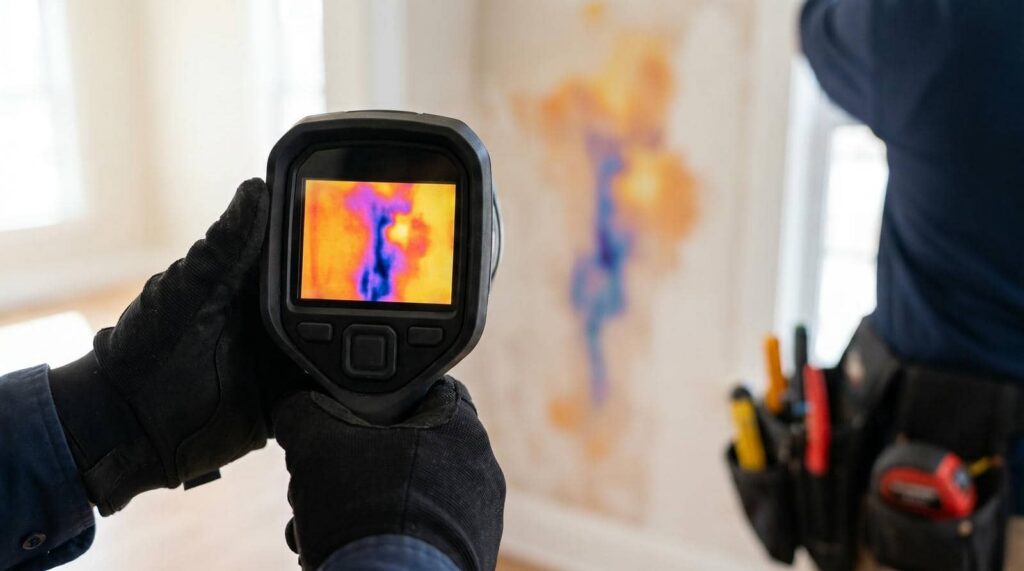
Water damage can hide in more places than you’d expect, and a small wet spot can turn into a major structural problem fast. You use moisture detection to find trapped water inside walls, floors, and insulation before mold, rot, and costly repairs spread. With the right meter, you can target drying, confirm damage, and avoid unnecessary demolition. The key is knowing what moisture reveals that your eyes can’t.
Key Takeaways
- Moisture detection finds hidden water damage that visible drying can miss.
- It helps identify damp areas behind walls, under floors, and inside insulation.
- Early detection reduces mold growth, warping, swelling, and structural deterioration.
- Moisture meters map affected areas accurately, guiding targeted repairs and drying.
- Professional moisture detection saves time, limits demolition, and supports safer restoration.
Why Moisture Detection Matters After Water Damage?
After water damage, moisture detection matters because visible drying doesn’t always mean the structure is actually dry. You can protect your home by checking hidden moisture in walls, floors, and framing before damage spreads.
If you skip this step, trapped water can weaken materials, encourage mold, and raise repair costs. Moisture detection gives you the data you need to make smart decisions, not guesswork. You’ll know when to dry further, replace materials, or move toward long term solutions.
It also supports preventative measures, helping you stop recurring problems after a leak, flood, or burst pipe. When you verify dryness, you’re not just fixing damage—you’re restoring a safer, healthier space for everyone who belongs there.
How Moisture Meters Find Hidden Wet Spots
You can use a moisture meter to locate hidden wet areas behind walls, under floors, and inside building materials without opening every surface.
The meter reads changes in electrical resistance or capacitance, and those shifts help you pinpoint where moisture has collected.
When you compare readings across a suspect area, you can identify wet spots and judge how severe the moisture intrusion is.
Pinpointing Hidden Wet Areas
Moisture meters help you locate hidden wet areas by measuring changes in electrical resistance or capacitance inside materials like drywall, plaster, and wood. You can sweep walls, floors, and ceilings to spot hidden leaks before they spread.
This lets you build moisture mapping that shows where damage clusters and where drying should start. When you test around baseboards, under sinks, and near windows, you’re narrowing the search without opening every surface.
That’s practical because you save time, reduce disruption, and work with a clear plan. You also protect your team or family by finding damp zones early, before mold growth or structural weakening starts.
With careful scanning, you can target repairs and restore affected areas more confidently and efficiently.
Reading Moisture Meter Data
Once you’ve swept an area and found likely damp zones, the next step is reading the meter correctly so you can separate true moisture from surface noise. You’ll compare baseline readings from dry materials with suspicious spots, then watch for consistent jumps, not random spikes.
Different moisture meter types respond differently: pin meters measure resistance inside the material, while pinless units scan beneath the surface. Use moisture reading techniques like slow passes, repeated checks, and angle changes to confirm patterns.
If one reading stays elevated across nearby points, you’ve likely found a hidden wet spot. Trust trends, not one-off numbers. That approach helps you work confidently, communicate clearly with your team, and feel sure you’re identifying damage before it spreads.
Where Water Damage Hides in Walls and Floors
Water damage often hides behind baseboards, inside wall cavities, and beneath flooring, where leaks can spread long before they leave visible stains.
You’ll often find hidden leaks around plumbing chases, under window sills, near tubs, and at slab edges where moisture wicks into materials.
In walls, drywall, insulation, and framing can trap moisture and create concealed damage without obvious surface signs.
On floors, water can move under vinyl, laminate, tile underlayment, and carpet padding, especially along seams and junctions.
You belong in the habit of checking these vulnerable zones with moisture tools after any spill, pipe issue, or storm entry.
That way, you can map problem areas quickly, reduce guesswork, and focus repairs where they matter most.
What Moisture Detection Catches Before Damage Spreads?
Before visible staining appears, moisture detection can reveal damp materials, elevated readings in hidden cavities, and small leaks that’re already migrating through drywall, flooring, or framing.
You can use detection technology to identify trapped water in subfloors, insulation, and base plates before it weakens building materials.
Moisture sensors help you compare normal and abnormal conditions, so you can localize the affected area without tearing into finished surfaces.
That lets you act early, dry the space faster, and reduce the chance of warping, swelling, or microbial growth.
When you understand what the tools catch, you’re better prepared to protect your home and stay in control with a crew that knows how hidden moisture behaves.
Signs You Need Professional Moisture Detection
If you see visible stains, warped surfaces, or swelling in materials, you likely need professional moisture detection to confirm hidden water intrusion.
Musty odors and persistent dampness often indicate moisture behind walls, under floors, or in insulation where you can’t inspect directly.
A trained technician can locate the source, measure the extent, and help you stop further damage quickly.
Visible Stains And Warping
Have you noticed brownish stains spreading across ceilings, walls, or baseboards, or flooring that’s starting to buckle, swell, or warp? Those visible changes often signal hidden moisture migration, and you shouldn’t ignore them.
You can track stain patterns to see whether leaks are active, recurring, or following framing members, pipes, or seams. Warped trim, cupped hardwood, and swollen drywall point to warp causes like prolonged saturation, trapped water, or failed waterproofing.
When you spot these clues, professional moisture detection helps you confirm the source before damage spreads. Experts use meters and infrared tools to map affected areas, so you can join other informed property owners who act early.
That approach protects structure, limits repairs, and gives you a clear plan.
Musty Odors And Dampness
Even when you can’t see a leak, a persistent musty odor or clammy indoor air often points to hidden moisture, microbial growth, or damp building materials.
You shouldn’t ignore musty smells, because they often mean your space has entered damp environments where mold can spread fast. Professional moisture detection helps you find the source before damage worsens.
- Check rooms with poor airflow
- Inspect carpets, drywall, and insulation
- Measure humidity and surface moisture
- Trace odors to concealed cavities
- Confirm whether cleanup is complete
When you act early, you protect your home and your people.
Moisture mapping gives you clear data, so you can repair the right area and avoid guesswork. That’s how you keep your space safer, drier, and healthier for everyone.
How Moisture Checks Speed Up Drying and Repairs
When you track moisture levels during drying, you can target the wettest materials first and avoid wasting time on areas that are already drying out.
Moisture checks show you where water hides in drywall, flooring, framing, and insulation, so you can place air movers, dehumidifiers, and heat more effectively. That boosts drying efficiency and shortens your repair timeline because you’re not guessing or leaving pockets of moisture behind.
You also get clear progress data, which helps you know when to adjust equipment, remove materials, or move to rebuild work.
Frequently Asked Questions
Can Moisture Detection Prevent Mold Growth After a Leak?
Yes—you can use moisture detection to stop mold growth after a leak. You’ll spot hidden dampness fast, improve leak detection, dry materials quickly, and support mold prevention, protecting your home and keeping your space healthy.
How Often Should Moisture Levels Be Checked During Restoration?
You should check moisture levels daily at first; this restoration frequency lets your moisture monitoring catch lingering dampness before it blooms into bigger problems, and you’ll stay aligned with your team’s recovery plan.
Do Moisture Meters Work on All Flooring Materials?
No, you can’t rely on one meter for every floor. Your moisture meter accuracy depends on flooring material compatibility, so you should match pin or pinless settings to wood, laminate, tile, or carpet systems.
Can Hidden Moisture Return After Repairs Are Completed?
Yes—hidden moisture can return after repairs if you haven’t fully dried the structure or fixed hidden leaks. You’ll verify repair effectiveness with follow-up moisture checks, so you stay confident, informed, and protected together.
Is Moisture Detection Needed After Minor Water Spills?
Yes, you do after minor spills, because hidden moisture can linger. A moisture assessment helps you confirm surfaces are dry, prevent mold, and protect your space, so you and your community stay safe and confident.
Recap
Moisture detection gives you a clear picture of water damage before it spreads. You can find hidden wet spots in walls, floors, and other materials without tearing anything apart. That lets you dry affected areas faster, target repairs, and reduce mold and structural risks. Think of it as a flashlight in a dark room: it reveals what you can’t see, so you can act quickly and protect your property.