
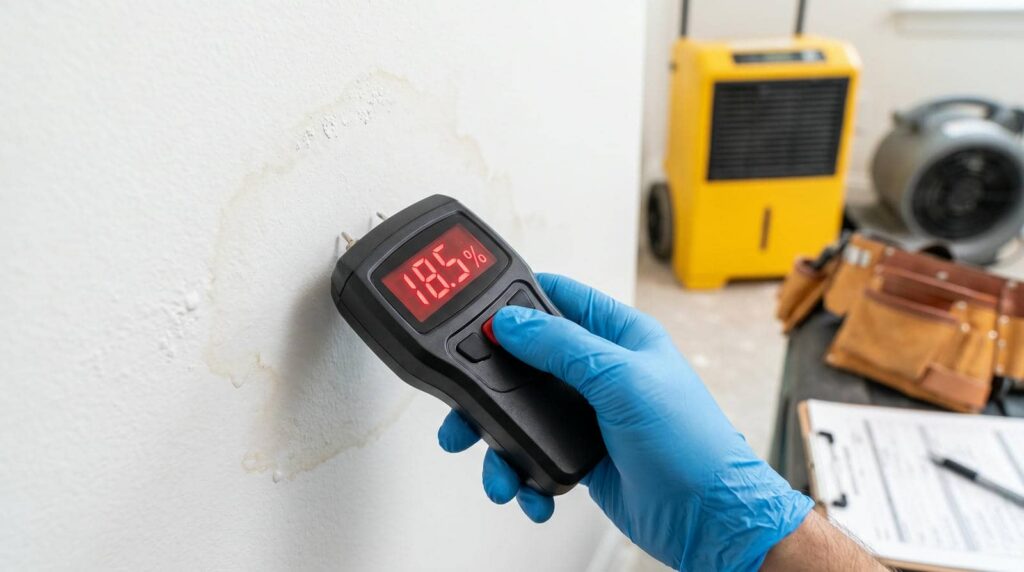
You need fast readings, you need hidden leaks, and you need reliable tools when water damage shows up. With the right moisture meters and thermal imaging, you can pinpoint damp walls, trapped water in floors, and problem areas behind ceilings before repairs get more expensive. Each method has strengths, limits, and best-use cases, and choosing the wrong one can slow cleanup or miss damage that’s already spreading.
Key Takeaways
- Pin meters give accurate direct readings in wood and drywall for internal moisture detection.
- Pinless meters scan large areas quickly without damage, making them useful for fast surface checks.
- Infrared cameras reveal temperature differences that can indicate hidden moisture behind walls and ceilings.
- Hygrometers track ambient humidity to support moisture trending and identify ongoing water issues.
- Baseline logging and grid testing help document moisture changes and pinpoint affected areas over time.
Best Moisture Detection Tools
When you’re evaluating moisture detection tools, start with the ones that give you fast, reliable data without guesswork: pin meters for direct material readings, pinless meters for noninvasive surface scans, and infrared cameras for spotting temperature patterns that can indicate hidden moisture.
You’ll get the most useful results when you match the tool to the surface and the decision you need to make. Moisture sensor technology gives you repeatable measurements, while advanced detection techniques help you compare readings and confirm changes over time.
Use calibrated instruments, log baseline values, and check suspect areas methodically. When you work this way, you stay in control and know you’re using the same professional standards trusted by skilled teams.
Pinpoint Hidden Moisture Behind Walls
To pinpoint hidden moisture behind walls, you should watch for wall moisture indicators like staining, swelling, peeling paint, and localized cool spots.
You can confirm these signs with noninvasive detection tools such as moisture meters and infrared imaging, which let you scan without opening the wall.
This approach helps you identify affected areas quickly and limit unnecessary damage during inspection.
Wall Moisture Indicators
Wall moisture indicators help you pinpoint hidden water intrusion before it spreads through framing, drywall, or insulation.
You can watch for staining, bubbling paint, soft drywall, warped trim, and cool patches that suggest trapped moisture. Use moisture sensor technology to compare suspect areas with dry reference points, then confirm patterns with wall inspection techniques at baseboards, outlets, and seams.
If readings rise near plumbing runs or exterior walls, you’ve likely found an active path. Trust your team’s shared process: document locations, note changes, and reassess after repairs.
Precision matters because early detection limits demolition, protects indoor air quality, and helps you coordinate fast action with confidence.
When you read the wall correctly, you stay ahead of costly hidden damage.
Noninvasive Detection Tools
Once you’ve spotted wall moisture indicators, use noninvasive detection tools to locate what’s hidden behind the surface without opening the assembly.
You can scan framing, insulation, and sheathing with electronic sensors that read dielectric changes and surface temperature patterns. Handheld pinless meters and infrared cameras help you compare suspect areas quickly, so you can map moisture spread before demolition starts.
Portable devices let you move room to room, check baseboards, and verify whether dampness is active or residual. You’ll make better decisions when you pair readings with visual cues like peeling paint or warped trim.
For best results, take multiple measurements, mark anomalies, and confirm findings from different angles. That process helps you protect your home, save materials, and stay confident as part of a prepared team.
Use Moisture Meters for Fast Readings
Use a moisture meter to get fast surface readings across floors, walls, and trim after suspected water exposure.
You can compare readings at multiple points to spot abnormal moisture patterns and confirm where damage extends.
If the surface looks dry but the meter shows elevated values, you’ve likely found hidden moisture that needs further inspection.
Fast Surface Readings
Moisture meters give you a quick, reliable surface check when you need to spot water intrusion fast. You can scan walls, baseboards, and flooring for surface moisture without guesswork, then compare readings across similar materials for a quick assessment.
Hold the meter flat, keep pressure consistent, and let the display settle before you record the value. That simple routine helps you and your crew share the same baseline, so everyone speaks the same diagnostic language.
Look for sudden changes, not just high numbers, because consistency matters more than one isolated reading. When you document each point, you build a clean map of affected areas and move from doubt to action with confidence, speed, and precision during the first response.
Hidden Moisture Detection
When visible damage only tells part of the story, moisture meters help you find trapped water behind drywall, under flooring, and inside framing. You can scan broad areas quickly, then confirm suspect spots with pin or pinless readings.
Compare readings to nearby dry materials to spot hidden moisture before it spreads or causes mold. Use detection techniques like grid testing, baseboard checks, and repeated measurements after drying starts.
If readings stay elevated, you know the cavity still holds water and needs more drying. This approach lets you act with confidence, protect the structure, and work like a disciplined team.
Find Leaks With Thermal Imaging
A thermal camera can quickly reveal hidden temperature differences that often point to moisture intrusion behind walls, under floors, or above ceilings. You’ll use thermal camera benefits to narrow inspection zones fast, so you and your team can act with confidence.
Pair it with proven leak detection techniques to confirm suspect areas before opening finishes.
- Scan surfaces in overlapping passes.
- Compare cool anomalies against dry reference areas.
- Mark patterns that track plumbing, windows, or joints.
- Verify findings with a moisture meter.
This approach helps you belong to a disciplined response process, not guesswork. You’ll reduce unnecessary demolition, improve accuracy, and communicate clear findings to homeowners or property managers.
Precision matters, and thermal imaging gives you a reliable first look.
Detect Trapped Water in Floors and Ceilings
Trapped water in floors and ceilings often hides long after visible leaks stop, so you need to inspect for sagging surfaces, soft spots, staining, and cold or damp areas that persist after drying.
Use moisture mapping to plot readings across the full surface, then compare edges, seams, and low points where trapped water collects.
You’ll spot abnormal patterns faster when you test adjacent rooms, wall intersections, and penetrations around vents, pipes, and fixtures.
Mark each reading, track changes over time, and focus on areas that stay elevated after ventilation.
This approach helps you join a disciplined inspection routine with confidence, so you can isolate concealed moisture before it spreads, weakens framing, or damages finishes.
Compare Moisture Detection Methods
Once you’ve identified hidden moisture in floors and ceilings, the next step is choosing the right detection method for the material and the damage pattern. You’ll compare tools by depth, surface type, and how moisture moves through assemblies.
Pin meters read internal moisture in wood and drywall well.
Pinless meters scan larger areas fast, but they’re less specific.
Infrared imaging shows temperature anomalies, helping you trace wet zones.
Hygrometers confirm ambient humidity and support trending.
For layered materials, capillary action can pull water sideways, so surface readings may miss the full spread.
In dense assemblies, moisture retention stays high after the surface feels dry. You belong with the method that matches the substrate, because accurate comparison reduces guesswork and helps you document damage with confidence.
Choose the Best Tool for Water Cleanup
Which tool should you use for water cleanup? You should match the tool to the spill depth, material, and risk.
For shallow water on hard surfaces, a wet/dry vacuum gives you fast extraction and control.
For soaked carpet or padding, use a submersible pump first, then a dehumidifier and air mover to finish the job.
In tight spaces, a sponge mop or absorbent towels help you reach corners without spreading contamination.
If you work with a team, assign one person to extraction and another to monitoring moisture readings. That keeps your water cleanup techniques consistent and efficient.
Choose equipment that supports moisture prevention strategies, because fast removal reduces mold growth, structural damage, and odor.
You’re not just cleaning; you’re restoring a safe, shared space.
Frequently Asked Questions
Can Moisture Damage Electrical Wiring Before Visible Signs Appear?
Yes, you can have hidden moisture damage electrical wiring before visible signs appear. Moisture detection helps you catch it early, reducing electrical hazards, protecting your system, and keeping you confidently connected to a safer home.
How Long Does Hidden Moisture Take to Cause Mold Growth?
Hidden moisture can trigger mold in as little as 24 to 48 hours, and you won’t always know it’s there. You’ll interrupt the mold lifecycle fastest by finding moisture sources and drying them completely.
Does Humidity Affect Moisture Meter Accuracy Indoors?
Yes—high humidity levels can skew your readings, especially with surface-type meters. You should verify meter calibration, then measure in stable conditions. That way, you’ll trust your results and feel confident with your team.
Should Carpets Be Replaced After Water Exposure?
Yes, you should replace carpets after severe water exposure, but you can often restore them after clean-water incidents. You’ll need rapid water extraction, drying, and carpet restoration to prevent mold, odors, and hidden structural damage.
Can Moisture Detection Help With Insurance Claims?
Yes, you can use moisture detection to strengthen insurance claims. You’ll document hidden damage, support claim documentation, and speed insurance processes. You’ll also show inspectors objective evidence, helping you make a well-prepared, credible claim.
Final Thoughts
You can stop hidden water damage before it spreads when you use the right moisture detection tool. Pin meters, pinless meters, and thermal imaging each help you spot leaks fast, even behind walls, under floors, or above ceilings. Check readings carefully, compare methods, and act quickly to reduce mold and structural loss. With the right approach, you’ll see the problem clearly, like a lantern in a dark attic, and move straight to cleanup.