When water damage occurs, mold can start to grow within just 24 to 48 hours. This presents significant health risks, including respiratory issues and allergies. To tackle this effectively, you need to understand the risks, recognize signs of mold growth, and take immediate action. Ignoring these steps can lead to more severe issues down the line. Let’s explore the critical actions you should take to guarantee a safe environment.
Key Takeaways
- Mold can develop within 24 to 48 hours after water damage, so immediate action is critical.
- Inspect for visible mold and musty odors in affected areas to assess contamination.
- Use protective gear and isolate contaminated areas with plastic sheeting during removal.
- Clean small mold patches with a water-detergent solution; seek professional help for larger infestations.
- Ensure thorough drying and proper ventilation to prevent future mold growth after removal.
Understanding the Risks of Mold After Water Damage
When water damage occurs, it’s vital to understand that mold can develop quickly in damp environments. Mold spores thrive in moisture, making water-damaged areas prime locations for growth.
You mightn’t realize that mold can impact your health, leading to respiratory issues, allergies, or other health complications. The risks increase considerably if you don’t address water damage promptly.
It’s important to act fast; mold can start growing within 24 to 48 hours of water exposure. If you’re dealing with water damage, be aware that hidden mold can lurk in walls, carpets, and ceilings.
Knowing this can help you take proactive steps to mitigate mold growth. By understanding these risks, you can make informed decisions that protect both your living environment and your well-being.
Don’t underestimate the importance of addressing water damage swiftly to guarantee a safe and healthy space for you and your loved ones.
Signs of Mold Growth to Look For
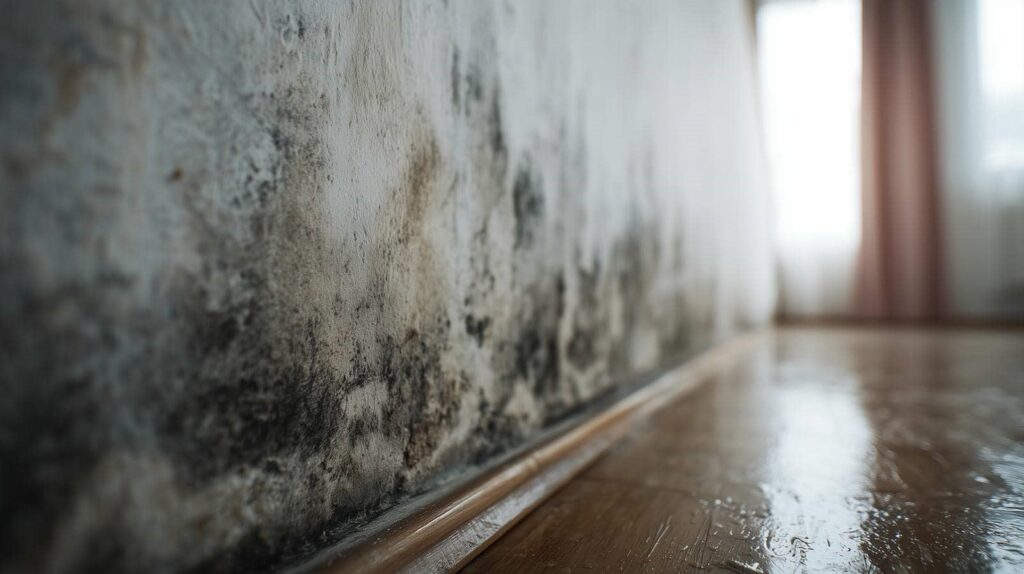
After experiencing water damage, it’s crucial to be vigilant for signs of mold growth. Look for visible mold patches, which can appear in various colors, including black, green, or white. A musty odor often accompanies these patches and can indicate hidden mold.
Pay close attention to damp areas, as mold growth conditions thrive in moisture-rich environments.
Utilize mold detection techniques such as moisture meters to assess humidity levels in your home. If you notice persistent condensation on windows or walls, this could signal a problem. Additionally, be aware of any health symptoms, like coughing or sneezing, that worsen indoors.
Regularly inspect areas prone to moisture, such as bathrooms, kitchens, and basements. By recognizing these signs early, you can take proactive measures to mitigate mold risk and create a safer living environment for yourself and your loved ones.
Immediate Steps for Mold Removal
To effectively tackle mold removal, you must act swiftly once you’ve identified the presence of mold.
Begin with mold identification techniques; visually inspect affected areas and use moisture meters to pinpoint hidden growth. Once confirmed, prioritize safety by wearing gloves, goggles, and a mask to protect against spores.
Next, isolate the contaminated area to prevent spores from spreading. Seal off doors and vents with plastic sheeting. Guarantee proper ventilation by opening windows and using fans.
For small patches, a solution of water and detergent can suffice, but for larger infestations, consider using a commercial mold remover.
After removing the mold, thoroughly dry the area to prevent regrowth. Discard any porous materials that can’t be cleaned, like drywall or carpeting.
Professional Mold Remediation Services
If you’ve encountered extensive mold growth that exceeds your ability to manage, seeking professional mold remediation services is vital.
Trained experts provide thorough mold inspections to identify the extent of the infestation and potential hidden growth. They’ll utilize advanced equipment to assess moisture levels, making sure no areas are overlooked.
Once the inspection is complete, professionals implement effective cleanup techniques tailored to your specific situation.
These may include containment methods to prevent spores from spreading, along with specialized cleaning solutions that eliminate mold at its source.
They’ll also guarantee proper ventilation and drying, which are essential in preventing future growth.
Preventing Future Mold Problems After Water Damage
While dealing with water damage, it’s vital to implement preventative measures to avoid future mold issues. Start by using effective mold prevention techniques, such as sealing leaks and ensuring proper drainage around your property. This can greatly reduce moisture that fosters mold growth.
Humidity control is imperative; aim to keep indoor humidity levels below 50%. You can achieve this by using dehumidifiers in damp areas and ensuring adequate ventilation in bathrooms and kitchens.
Regularly check your HVAC systems for mold, as they can circulate spores throughout your home.
Another important step is to conduct routine inspections, especially in areas prone to moisture, like basements and attics. If you discover any signs of mold early, address them immediately to prevent a larger infestation.
Frequently Asked Questions
How Long Does Mold Take to Grow After Water Damage?
Mold growth can start within 24 to 48 hours after water damage. To prevent this, you need effective moisture control. Understanding the mold growth timeline helps you take proactive measures to protect your environment.
Can I Remove Mold Myself Without Professional Help?
Yes, you can handle DIY mold removal if it’s less than ten square feet. Make sure you have proper mold removal supplies like gloves and masks, and always prioritize safety when tackling the issue yourself.
Is All Mold Harmful to Health?
Not all mold types are harmful to health, but some can cause respiratory issues or allergic reactions. It’s essential to identify the specific mold present and understand its potential health effects to guarantee safety.
What Insurance Covers Mold Removal Costs?
Most mold coverage depends on your insurance policies. Standard homeowners’ insurance may cover mold removal, but check for specific stipulations. Always assess your policy’s particulars to guarantee you’re protected from potential pitfalls.
How Do I Choose a Reliable Mold Remediation Company?
To choose a reliable mold remediation company, look for certified professionals who offer thorough mold inspection services and proven remediation techniques. Verify their reputation through reviews, and ascertain they follow industry standards for safety and effectiveness.
To Sum Up
Addressing mold after water damage is as essential as patching a leaky roof to protect your home. By understanding the risks, recognizing the signs, and taking immediate action, you can safeguard your health and property. Whether you choose to tackle the problem yourself or enlist professional services, swift and thorough remediation is key. Don’t let mold take hold; act quickly to guarantee a safe, healthy living environment for you and your loved ones.