Fire Damage Restoration in Macomb
Fire damage restoration in Macomb and surrounding areas. Insurance billing accepted. Call (586) 580-0197.
Smoke does not stop at the room where the fire started. Within hours of a house fire, soot particles travel through ductwork, settle into closet fabrics, and coat the inside of cabinets two rooms away from any visible char. The smell that seems to fade after a few days is not gone, it has absorbed into drywall, insulation, and wood framing. Fire damage restoration is the process of reversing all of that: not just removing debris, but neutralizing odor compounds at the molecular level and documenting every affected surface before a single insurance photo is taken.
What fire damage restoration actually involves
Fire leaves three distinct problems behind, and each one requires a different approach.
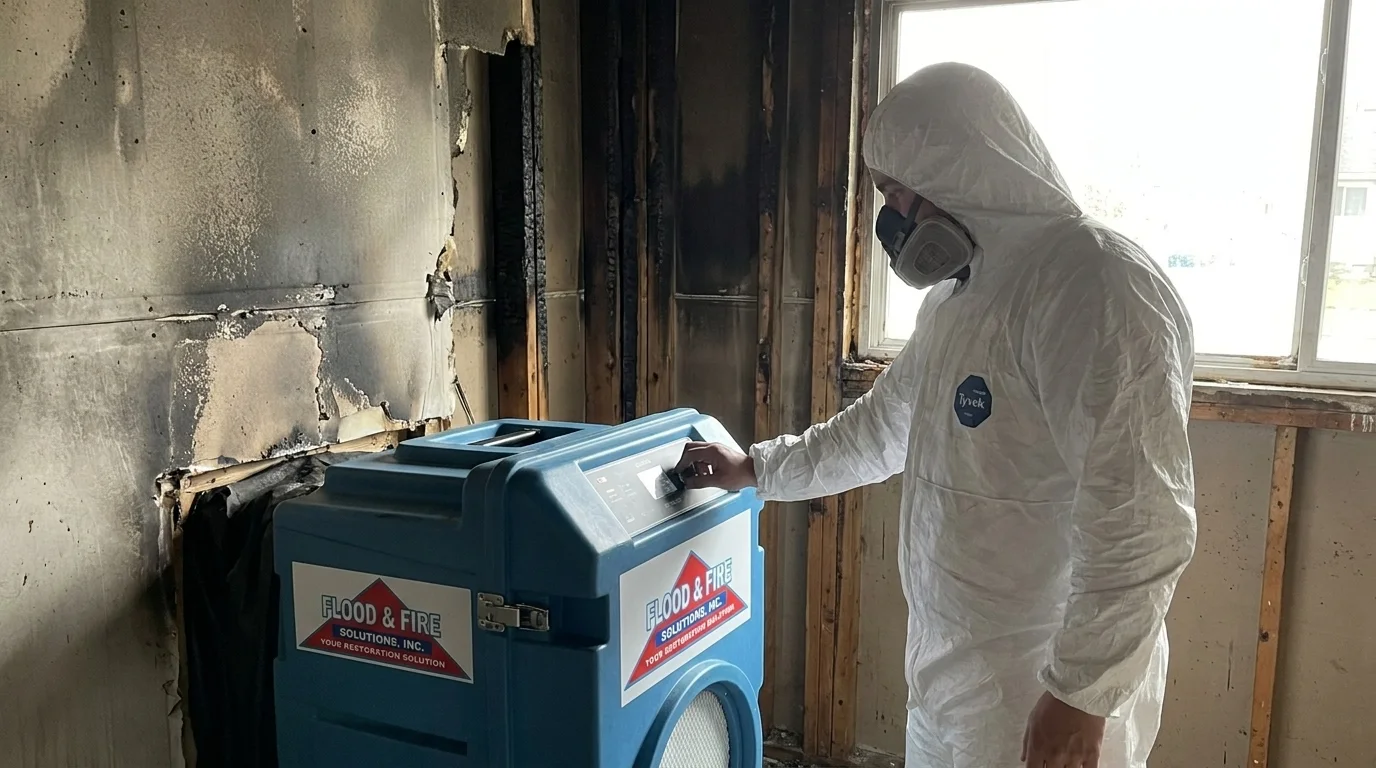
The first is char and structural damage, burned framing, compromised drywall, melted fixtures. This is the visible part, and most homeowners focus here. The second is soot contamination, which spreads far beyond the burn zone. Soot from synthetic materials (carpet, upholstery, plastics) is oily and smears if wiped incorrectly, while soot from wood and paper is dry and powdery but penetrates porous surfaces deeply. Treating both the same way is one of the most common mistakes in fire cleanup. The third problem is odor, which is not just a comfort issue. Volatile organic compounds from combustion bond to surfaces and re-off-gas for months if not treated with the right chemistry.
Professional fire and smoke restoration also involves contents management: furniture, clothing, documents, and personal items that may be salvageable but need to leave the structure for cleaning and deodorization while the building is being worked on. Ductwork inspection and cleaning is often necessary, since HVAC systems can circulate soot throughout the entire home after a fire if the system ran during or after the event.
Timeline: a single-room fire with limited smoke spread can be stabilized and dried within a few days; a whole-floor or multi-room loss with structural involvement typically runs two to four weeks before reconstruction begins.
Our process
-
Emergency board-up and site security. Before restoration work begins, open windows, damaged doors, and roof penetrations are secured. This protects the structure from weather intrusion and prevents further contamination from outside air.
-
Soot characterization and scope documentation. Every surface in the affected area is assessed for soot type, coverage, and depth of penetration. Protein soot from kitchen fires is nearly invisible but leaves a powerful odor and requires enzymatic cleaners; synthetic soot from burning plastics requires alkaline chemical sponges and specific PPE. This step drives the entire cleaning plan and produces the documentation your insurance adjuster needs.
-
Contents pack-out. Salvageable items are inventoried, photographed, and transported to a controlled environment for cleaning. This protects belongings from ongoing soot exposure during structural work and gives your carrier a documented contents claim.
-
Surface cleaning, HEPA vacuuming, and chemical sponging. Ceilings are worked before walls, walls before floors. Dry soot is removed first with HEPA-filtered vacuums before any wet cleaning begins, wiping dry soot without vacuuming first drives it deeper into the surface. Affected ductwork is cleaned and sealed or replaced.
-
Thermal fogging and ozone treatment. Once surfaces are clean, odor compounds that have penetrated into framing, subfloor, and insulation are neutralized. Thermal fogging disperses a deodorizing agent that follows the same pathways smoke traveled. In severe cases, ozone treatment is used in unoccupied spaces to break down odor molecules at the molecular level. Air scrubbers with activated carbon filtration run continuously until clearance readings confirm acceptable air quality.
What separates a good fire damage response from a bad one
The most common failure in post-fire restoration is treating every soot deposit the same way. Wiping oily synthetic soot with a dry sponge spreads it. Using alkaline cleaners on protein soot without the right dwell time leaves the odor source intact. Both mistakes result in a structure that looks clean but smells like fire six months later.
A second failure point is incomplete ductwork inspection. If the HVAC system ran during or after the fire, soot has almost certainly been distributed to rooms that show no visible damage. Adjusters for major carriers are trained to ask about duct cleaning, and a scope that omits it will likely be flagged during the claim review.
Third: contents documentation. Insurance adjusters need a line-item contents inventory with photos and estimated replacement values. Restoration companies that skip a formal pack-out and inventory process leave homeowners under-compensated on the personal property portion of their claim.
Finally, structural drying matters even after fire. Firefighting water introduces Category 1 water intrusion into the same structure. Moisture readings should be taken throughout the affected area, and any wet framing or subfloor needs to be dried before reconstruction begins to prevent secondary mold growth.
What does fire damage restoration cost?
Typical costs for fire damage restoration vary significantly based on the size of the affected area, the type of materials burned, and whether structural reconstruction is required. Most homeowners pay somewhere between $3,000 and $50,000 for the full scope of fire cleanup and post-fire restoration, with smaller, contained losses on the lower end and whole-floor or multi-story losses at the higher end. Every loss is different, and Flood & Fire Solutions provides a written scope of work before any restoration begins. Homeowners insurance typically covers fire damage restoration in full, less your deductible, when the loss is sudden and accidental.
| Scenario | Typical industry range |
|---|---|
| Single room, limited smoke spread | $3,000 – $8,000 |
| Multi-room smoke contamination, no structural damage | $8,000 – $18,000 |
| Partial structural fire with smoke throughout home | $18,000 – $35,000 |
| Whole-floor or major structural fire | $35,000 – $75,000+ |
| Contents pack-out and cleaning (per loss) | $2,000 – $10,000 |
| Ductwork cleaning and sealing | $800 – $3,500 |
Seasonal and regional considerations
In Macomb County and the surrounding communities, house fires spike in winter months when heating equipment runs continuously, space heaters are brought out of storage, and fireplaces see heavy use after sitting idle. Michigan’s cold winters also mean that firefighting water can freeze in wall cavities and under flooring before it is extracted, complicating the drying phase. Structures built before the 1980s, common throughout Macomb, St. Clair Shores, and Warren, often have older knob-and-tube or aluminum branch wiring that presents elevated fire risk and may require electrical inspection before reconstruction permits are issued.
Service area
Flood & Fire Solutions is based in Macomb, MI and provides fire damage restoration throughout Macomb County and the surrounding region, including Sterling Heights, Warren, St. Clair Shores, Shelby Township, Clinton Township, and Chesterfield. The city-specific pages for each community link back here for the full technical detail on the process.
If your home or property has been through a fire, the clock on secondary damage starts now. Call Flood & Fire Solutions at (586) 580-0197 to begin smoke and soot removal and get a written scope before any work starts.
Frequently Asked Questions
What is the difference between protein soot and synthetic soot, and why does it change how cleanup is done?
Does homeowners insurance cover fire damage restoration?
How far does smoke damage typically spread beyond the room where the fire started?
Why is water damage a concern after a fire, and how does it affect the restoration timeline?
What should I do with my belongings immediately after a fire while waiting for the restoration crew?
Looking for the best fire damage restoration company in Macomb?
Flood Solutions inc provides fire damage restoration in Macomb, MI and the surrounding area, and has served local property owners since 1996. Customers rate us 4.4 out of 5 stars across 35 Google reviews. We answer calls 24/7 — call (586) 580-0197 for immediate help.
Need Fire Damage Restoration now?
We respond 24/7 across Macomb and surrounding MI cities.
Related Coverage
- Our Restoration Services
- Contact Flood & Fire Solutions
- Fire Damage Restoration in Chesterfield
- Fire Damage Restoration in Clinton Township
- Fire Damage Restoration in Rochester Hills
- Fire Damage Restoration in Shelby Township
- Fire Damage Restoration in Sterling Heights
- Fire Damage Restoration in Troy
- Fire Damage Restoration in Utica
- Fire Damage Restoration in Warren
- How To Choose a Restoration Company in (Without Getting Burned)
- The Fire Damage Restoration Process, Explained
- How Professionals Remove Smoke Odor (and Why DIY Usually Fails)