
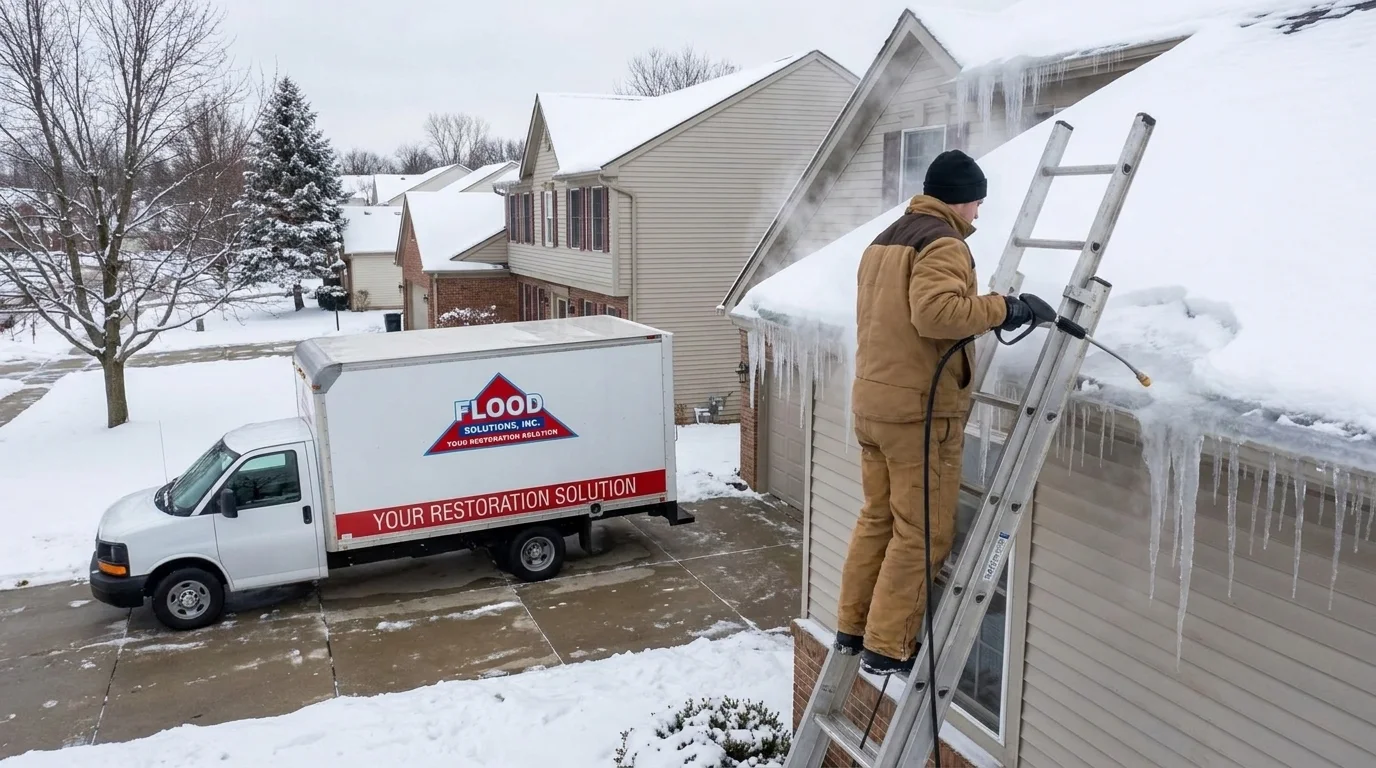
Ice Dams in Macomb
Ice dams in Macomb and surrounding areas. Insurance billing accepted. Call (586) 580-0197.
When snow melts on a warm roof deck and refreezes at the cold overhang, the water backs up under your shingles instead of running off. That backed-up water finds every gap in the roofing membrane, drips into attic insulation, and eventually shows up as a brown ring on a bedroom ceiling weeks after the thaw. By the time most Macomb homeowners notice the stain, water has often been moving through the attic and wall cavities for days.
What ice dams actually involve
An ice dam is a ridge of ice that forms at the roof’s edge, usually above the soffit, once heat escaping from the living space melts snow higher up the roof faster than it melts at the eaves. The meltwater refreezes at the colder overhang, builds into a dam, and pools behind it. That standing water has nowhere to go but sideways and up, under the shingle lap, through the roof deck, and into attic insulation or the ceiling drywall below.
The damage isn’t always obvious from inside the house right away. Wet cellulose or fiberglass insulation compresses and loses its R-value long before a ceiling stain appears. Water can also travel along rafters and truss members before dripping at a spot several feet from where it actually entered the roof, which is why an ice dam response has to start on the roof and work inward, not the other way around.
Our process
- Roof and attic assessment. We look at where the ice has formed, how far up the roof slope it extends, and check the attic from inside for wet insulation, staining on the underside of the roof deck, or moisture at the top plates of exterior walls.
- Controlled ice and snow removal. Ice is removed using low-impact methods, typically low-pressure steam, rather than chipping or hacking, which cracks shingles and creates new entry points for water. Roof rakes are used to clear excess snow load above the dam so less meltwater reaches it.
- Interior moisture mapping. Once the roof is clear, we check ceilings, exterior walls, and attic framing with moisture meters to find out how far the water actually traveled, not just where it surfaced.
- Extraction and structural drying. Where water has reached drywall, insulation, or framing, we extract standing moisture and set drying equipment following IICRC S500 drying principles, monitoring materials until they read dry rather than guessing at a timeline.
- Documentation for your insurance file. Photos, moisture readings, and a written scope go into a report you can hand directly to your adjuster.
What separates a good ice dam response from a bad one
The most common mistake is treating an ice dam as a roof problem only. A crew that clears the ice and leaves without checking the attic misses saturated insulation that will keep releasing moisture into the ceiling for days, and misses wall cavities that stay wet long enough to support mold growth. Chipping ice off with a hatchet or hammer is another shortcut that causes more damage than the dam itself, cracking shingles and splitting the roof deck in ways that create new leak paths the following winter.
Adjusters reviewing ice dam claims typically look for the extent of interior water intrusion versus surface damage only, and whether the loss was addressed promptly enough to avoid secondary damage like mold. Clear moisture documentation from the day of the loss, not weeks later, matters for how the claim gets processed.
What does an ice dam cost to fix?
Costs depend heavily on whether the dam is caught early or has already pushed water into the attic and walls. Every loss is different, which is why we provide a written scope before any work begins rather than quoting over the phone. Homeowners insurance typically covers the sudden water damage caused by an ice dam, though ongoing venting or insulation upgrades to prevent recurrence are usually treated as a maintenance cost outside the claim.
| Scenario | Typical range |
|---|---|
| Ice dam removal only, no interior damage found | $300 - $800 |
| Removal plus minor ceiling staining | $800 - $2,500 |
| Saturated attic insulation with drywall repair | $2,500 - $6,000 |
| Water intrusion into multiple rooms or wall cavities | $6,000 - $15,000 |
Seasonal & regional considerations
Macomb County sees the freeze-thaw swings that drive ice dam formation, cold snaps followed by sunny days or brief warm-ups that melt snow just enough to refreeze overnight at the eaves. Older housing stock in the area, particularly ranch and colonial homes built with less attic insulation than current code calls for, tends to lose more heat through the roof deck, which is exactly the condition that feeds an ice dam. Homes with additions, cathedral ceilings, or recessed lighting cut into the attic space are especially prone to uneven roof-deck temperatures.
Service area
We respond to ice dam damage throughout Macomb and the surrounding communities, including Warren, Sterling Heights, Clinton Township, Shelby Township, and Washington Township.
If water has already found its way past the dam and into your ceiling or attic, don’t wait for spring to find out how far it traveled. Call (586) 580-0197 to schedule an ice dam assessment and get a written scope before the damage spreads further.
Frequently Asked Questions
Does homeowners insurance cover ice dam damage?
How do you remove an ice dam without damaging my shingles?
How do I know if water from an ice dam reached my attic insulation?
Can I just wait for the ice dam to melt on its own?
Will removing the ice dam stop it from coming back?
Looking for the best ice dams company in Macomb?
Flood Solutions inc provides ice dams in Macomb, MI and the surrounding area, and has served local property owners since 1996. Customers rate us 4.4 out of 5 stars across 35 Google reviews. We answer calls 24/7 — call (586) 580-0197 for immediate help.
Need Ice Dams now?
We respond 24/7 across Macomb and surrounding MI cities.