If the fire department just cleared your house and you’re standing in the driveway wondering what happens next, call 911 again only if the fire reignites or someone needs medical attention. Once the scene is declared safe, call your homeowners insurance company to open a claim, then call a restoration company for emergency board-up and fire damage mitigation before anyone goes back inside. In Macomb, MI, that call can go to Flood and Fire Solutions at (586) 580-0197, a licensed and insured restoration company that has worked in Macomb County since 1996 and answers 24/7.
What order should I call people in after a house fire?
The order that protects your home and your insurance claim is: fire department or fire marshal clearance first, your insurer second, and a restoration company third for board-up and mitigation, before you touch or clean anything inside.
Don’t re-enter the structure until the fire department or fire marshal says it’s safe. Even a contained fire can leave hidden hot spots in walls, weakened framing, or an unstable roof section. Once you have clearance, call your insurer to open the claim, get a claim number, and ask whether your policy includes Additional Living Expense (ALE) coverage for temporary housing.
Your insurer may suggest a preferred vendor, but you are not required to use anyone but the contractor you choose yourself. Calling a restoration company directly, before the adjuster’s first visit, lets you start securing the property and documenting the damage on your own timeline.
What happens when you call a fire damage restoration company?
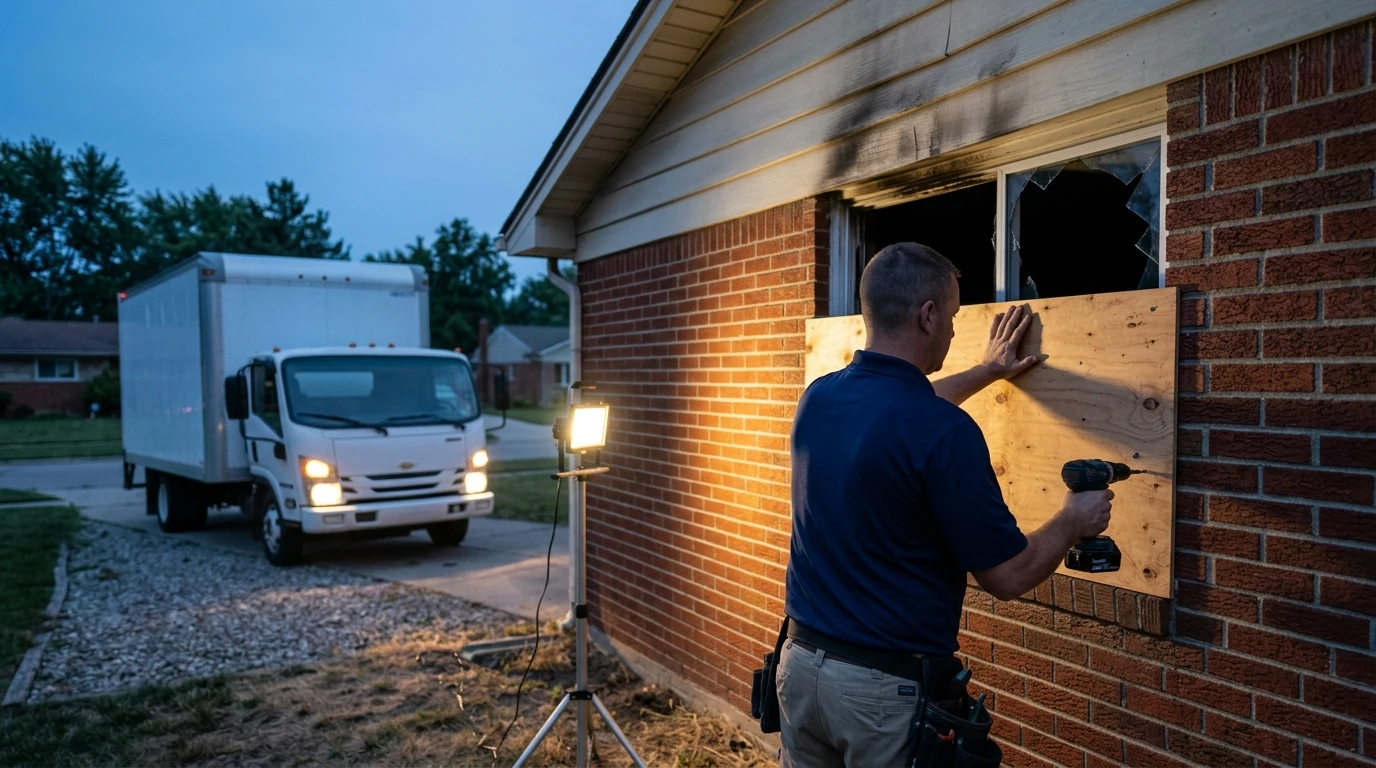
A same-call dispatch typically secures broken windows and damaged roof sections with board-up and tarping within hours, then documents the loss for your adjuster before any cleanup starts.
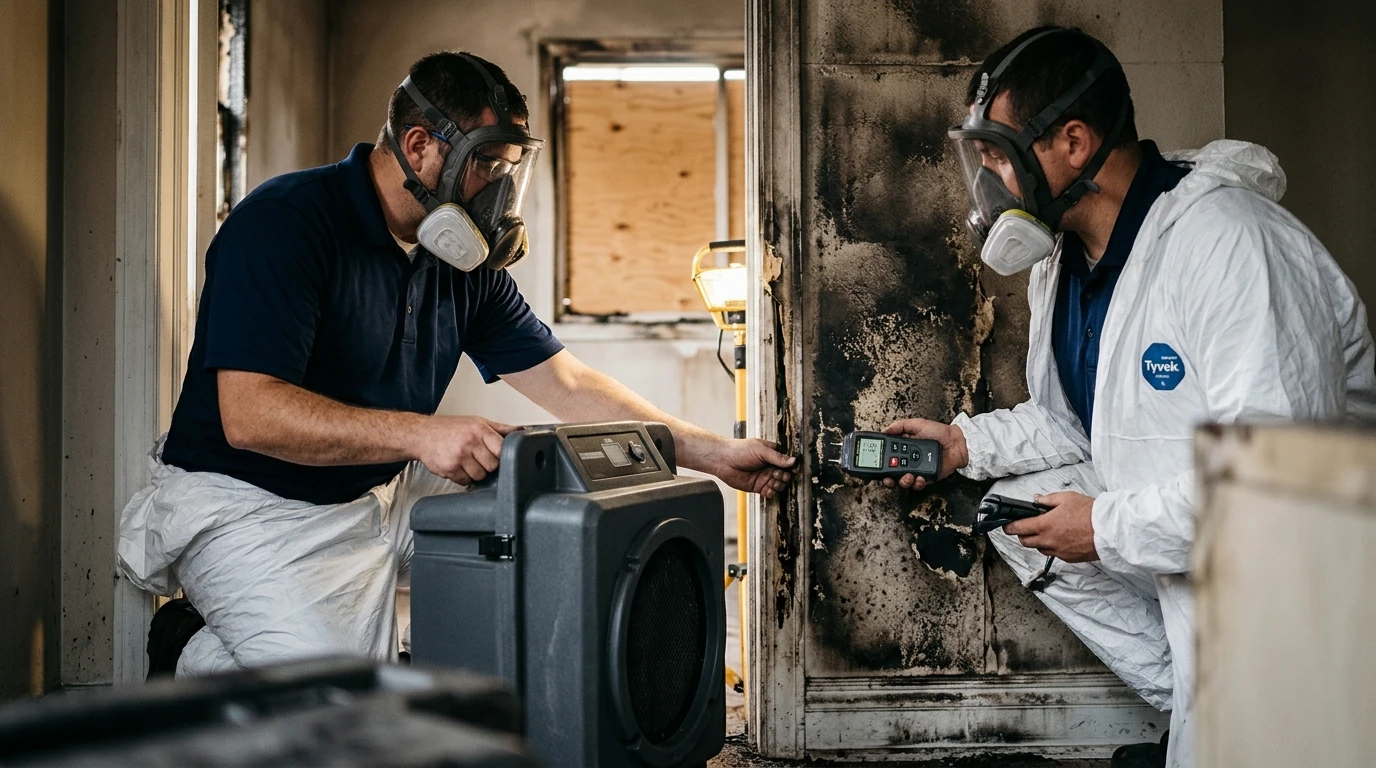
Have your policy number, the claim number if you have it, and your own photos of the exterior ready when you call. On arrival, a crew will board up broken windows and openings, tarp any roof damage, take moisture readings in areas hit by firefighting water, and assess soot spread room by room. This is also when a fire damage restoration company sets up HEPA air scrubbers to start pulling soot particles out of the air, and when emergency board-up work locks down the structure against weather and break-ins while the claim moves forward.
Salvageable belongings, furniture, electronics, clothing, documents, usually get pulled for off-site cleaning rather than treated in place. A content recovery team inventories and packs these items before they sit any longer in a smoke-saturated room. For a fuller walkthrough of what comes after board-up, see the fire damage restoration process explained.
What should you do in the first 24 hours after a house fire?
The first 24 hours matter because soot and water from firefighting efforts both get harder to remove the longer they sit, and a few common instincts actually make the damage worse.
- Don’t dry-brush or wipe soot off walls and fabric. Dry wiping grinds it deeper into the surface instead of lifting it off.
- Don’t run the HVAC system. A furnace or air handler that’s still operating will pull soot through the ductwork and spread it into rooms the fire never reached.
- Photograph every room before anything is moved or cleaned, including closets, cabinets, and the attic if it’s accessible. Your adjuster will want this record.
- Discard any food, beverages, and medication that were exposed to heat, smoke, or firefighting chemicals, even if the containers look undamaged.
- Keep every receipt for a hotel, meals, and anything you had to buy because you can’t live in the house. Most policies with Additional Living Expense coverage reimburse these costs, but only with documentation.
The U.S. Fire Administration’s guide on what to do after a home fire and the American Red Cross’s recovery checklist both cover this same first-24-hours window in more depth if you want a second source to walk through with family.
Does homeowners insurance cover fire damage?
Most standard homeowners policies cover sudden, accidental fire damage to the structure and its attached smoke and soot damage, along with temporary housing costs under Additional Living Expense coverage, but exact limits and deductibles vary by policy.
What the policy actually pays depends on your coverage limits, your deductible, and whether the cause of the fire falls under any exclusion in your specific contract. The Insurance Information Institute’s overview of which disasters homeowners insurance covers is a useful plain-language reference while you’re waiting on your adjuster. If you have questions about how a Michigan-licensed insurer is required to handle your claim, Michigan’s Department of Insurance and Financial Services is the state agency that oversees that process.
Documenting the loss early, before cleanup starts, protects your claim regardless of which company ends up doing the work. That’s true whether the loss happened in Macomb, Clinton Township, or anywhere else in the county.
Once the fire department has cleared the structure and you’ve opened a claim, the next useful step is getting the property boarded up and a written scope of the damage started. Request a fire damage consultation by calling (586) 580-0197 and a crew can walk the property with you before the adjuster’s first visit.
This guide was written by Craig Geatches, who covers residential fire and water damage recovery topics for Macomb County homeowners.
Video Transcript
The fire department just left, and you’re standing in your driveway wondering what happens next. Here’s exactly who to call, in order. First, make sure the scene is truly safe. Only call 911 again if the fire reignites or someone needs medical attention. Next, call your homeowners insurance company to open a claim, get your claim number, and ask about Additional Living Expense coverage. Then call a restoration company for emergency board-up and mitigation, before anyone goes back inside to touch or clean anything. In Macomb, Flood and Fire Solutions has secured homes since 1996, licensed, insured, and answering calls twenty-four seven, every single day. A fast dispatch means broken windows get boarded, roof damage gets tarped, and moisture readings begin within hours of your call. Crews also run HEPA air scrubbers to pull soot from the air and inventory salvageable belongings for off-site cleaning. In the first 24 hours, don’t dry-wipe soot, don’t run your HVAC, and photograph every room before anything gets moved. Toss any food or medication exposed to heat or smoke, and save every receipt, your insurer needs documentation to reimburse you. Documenting damage early protects your claim. Call Flood and Fire Solutions at (586) 580-0197 for a free estimate, day or night.