
Hidden wall moisture can stay out of sight until damage spreads, so you need to check for early clues, test suspect areas, and verify what you find. You can spot surface changes, measure dampness with a meter, and use infrared imaging to map temperature anomalies behind finishes. Each method adds a different layer of evidence, and the most reliable assessment comes when they agree.
Key Takeaways
- Look for peeling paint, bubbling wallpaper, soft drywall, stains, and musty odors as common signs of hidden wall moisture.
- Use a calibrated moisture meter to compare suspicious areas with dry reference spots and confirm elevated readings.
- Scan walls with an infrared camera to find cooler anomalies that may indicate trapped moisture.
- Check readings on drywall, plaster, and trim, and take multiple measurements for reliable results.
- Verify suspected moisture with additional inspection of plumbing, flashing, and joints to avoid false positives.
Look for Wall Moisture Warning Signs
When you inspect walls for hidden moisture, look for subtle warning signs such as peeling paint, bubbling wallpaper, soft or swollen drywall, discoloration, and a persistent musty odor.
You may also see water stains, damp spots, or faint tide marks near baseboards, ceilings, and window edges. These defects often signal an active leak, condensation buildup, or chronic humidity trapped inside the wall cavity.
Check whether the surface feels cool, blistered, or uneven, because those changes can indicate moisture migration beneath the finish.
If you notice peeling paint recurring after repainting, treat it as a diagnostic clue, not cosmetic wear.
Trust your observations; you’re not overreacting. Careful review helps you spot hidden damage early, protect the structure, and stay confident with others who maintain healthy homes.
Check Hidden Walls With a Moisture Meter
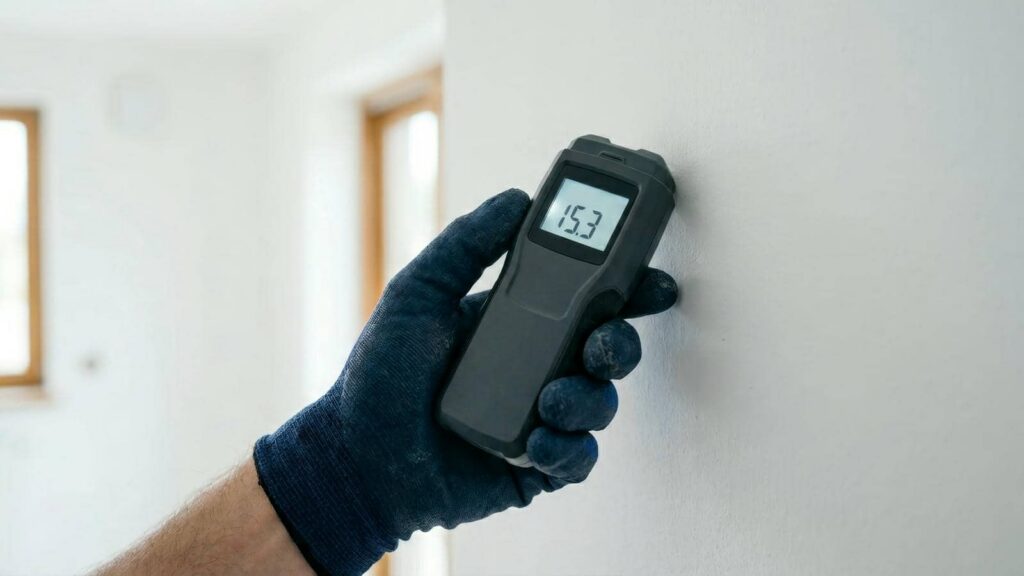
Use a moisture meter to confirm whether a suspicious wall is actually retaining water. You’ll compare readings across drywall, plaster, and trim, then judge whether the values exceed the dry baseline for your space.
Choose among moisture meter types: pin meters measure depth, while pinless units scan broader areas. Before testing, verify meter calibration so your numbers stay defensible.
- Mark the suspect area.
- Record a known dry reference.
- Take multiple readings nearby.
- Compare changes over time.
You’re not guessing; you’re building a clear diagnosis that helps your team act with confidence. Consistent patterns matter more than a single spike, so log each result and note material type.
If readings stay elevated, the wall likely needs closer investigation and targeted repair.
Use Infrared Imaging to Find Moisture
An infrared camera can reveal temperature patterns that often point to hidden moisture behind finished surfaces. You scan walls, ceilings, and trim, then compare cooler anomalies with dry areas.
Because wet materials usually hold and release heat differently, infrared technology helps you isolate suspicious zones before you open anything. Use this method in low-sunlight conditions and note recent HVAC use, since surface noise can distort readings.
Then confirm each anomaly with moisture detection tools, such as a pin or pinless meter, to avoid false positives. If you see a distinct band, spot, or streak, inspect nearby plumbing, flashing, and joints.
You’ll work more confidently when you combine thermal imaging with careful diagnosis, and you’ll join other informed homeowners who catch damage early.
Frequently Asked Questions
Can Hidden Wall Moisture Cause Mold Growth Indoors?
Yes—hidden wall moisture can cause indoor mold growth. You’ll need mold prevention through humidity control, because damp materials let spores colonize. You can diagnose trouble by spotting musty odors, staining, or persistent condensation early.
How Often Should Walls Be Inspected for Moisture?
You should inspect walls quarterly, and after leaks, storms, or plumbing work. Include home maintenance checks, and use moisture sensors for baseline readings; you’ll protect your home, stay informed, and catch hidden problems early.
Are Certain Building Materials More Prone to Moisture Damage?
Yes—wood materials and some insulation types absorb and retain moisture more readily, so you’ll see faster damage, swelling, and mold risk. You should prioritize diagnostics in assemblies with these vulnerable components.
Can Weather Affect Hidden Moisture Readings in Walls?
Yes—weather can skew your hidden wall moisture readings; dry heat and cold fronts sharpen contrast, while rain and humid air blur it. You’ll get better diagnostics when you track weather patterns and humidity levels together.
Should Professionals Handle Severe Wall Moisture Issues?
Yes, you should let professionals handle severe wall moisture issues; they’ll perform moisture detection and professional assessment, identify concealed damage, and guide repairs. You’ll protect your space, reduce risk, and stay confident throughout remediation.
Review
By watching for warning signs, checking suspect areas with a calibrated moisture meter, and scanning with infrared imaging, you can detect hidden wall moisture before it spreads. You’re combining visual inspection, measurement, and thermal analysis to build a reliable diagnosis. When these methods agree, you know the wall isn’t just a little damp—it’s a silent leak in disguise. Act fast, verify the source, and protect your home from further damage.