
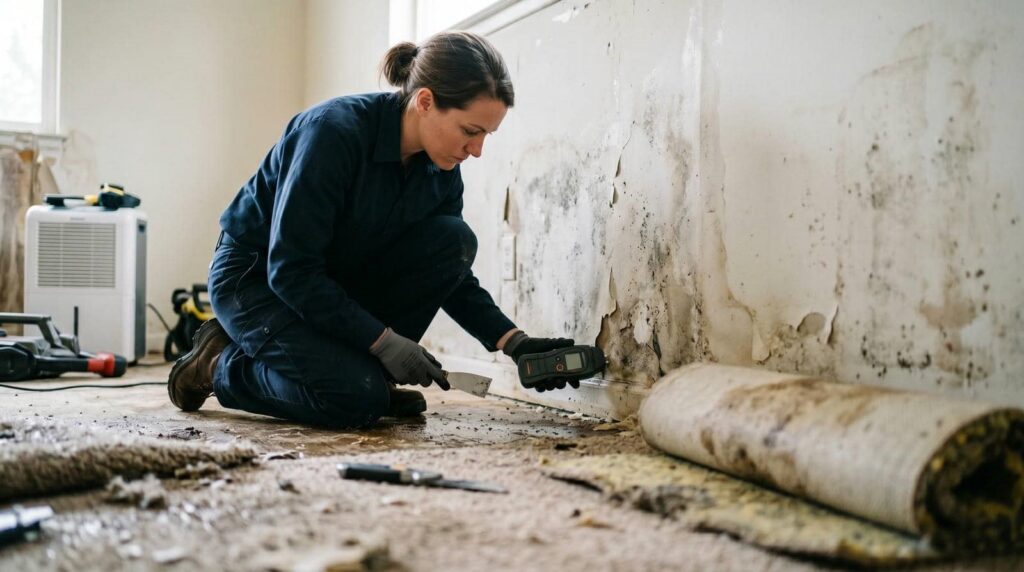
If you’ve had a leak or flood, hidden moisture can linger where you can’t easily see it. You might notice mold in corners or along trim, a musty odor that won’t go away, or irregular stains on drywall that seem to spread. These warning signs often point to dampness behind walls or under floors, where damage can worsen quietly. Knowing what to look for is only the first step.
Key Takeaways
- Musty odors often indicate hidden moisture behind walls, floors, or insulation.
- Peeling paint or bubbling surfaces can signal trapped dampness.
- Discoloration, stains, or soft spots on walls may reveal concealed water damage.
- Warped, spongy, or uneven flooring can point to moisture beneath the surface.
- Mold growth in corners or around trim is a common sign of hidden dampness.
Where Moisture Hides After Flooding
After flooding, moisture often lingers where you can’t easily see it: behind walls, under flooring, inside insulation, and beneath cabinets. You should inspect these hidden water sources carefully, because trapped water can stay in place long after the surface looks dry.
Pay attention to structural gaps, baseboards, subfloors, wall cavities, and utility chases, where water often collects and wicks upward. If you’re unsure, use moisture detection tools to check materials that seem intact. These tools help you confirm whether dampness remains in areas you can’t reach by sight alone.
Common Signs of Hidden Moisture Damage
Once you know where moisture tends to linger, you can look for the warning signs it leaves behind. You may notice mold growth in corners, around trim, or near vents, often paired with musty odors that don’t go away after cleaning.
Watch for peeling paint, bubbling surfaces, or drywall stains that spread in irregular patches. Wood surfaces can also shift; warped wood may feel soft, look uneven, or no longer fit tightly at joints.
Check metal details too, since rusted fixtures often signal long-term dampness nearby. These clues usually appear together, not alone, so trust your instincts if a room feels off.
If you spot several signs at once, you’re likely seeing hidden moisture damage that needs prompt attention.
How to Check for Moisture Behind Walls and Floors
To check for moisture behind walls and floors, start with the most revealing surfaces around the suspected area. You can look for discoloration, soft spots, bubbling paint, or warped trim during a careful wall inspection.
Use a moisture meter for moisture detection, and compare readings across nearby dry areas.
On floors, press gently for flexing, lifted edges, or spongy sections during your flooring assessment. Check baseboards, outlets, and corners for staining or musty odors.
Measure humidity levels in the room, since unusually high readings can support hidden dampness.
If you spot repeating patterns near plumbing, windows, or exterior walls, you’re likely seeing a leak path.
Act quickly so you and your home stay protected together.
Frequently Asked Questions
How Long Does Hidden Moisture Damage Take to Appear?
Hidden moisture damage can appear in days or take months, depending on hidden leaks and materials. You’ll spot issues sooner with moisture detection, especially if you check regularly and act fast when you notice changes.
Can Hidden Moisture Damage Affect Indoor Air Quality?
Absolutely—you can. Hidden moisture can trigger mold growth, releasing spores that lower indoor air quality. You may notice health risks like coughing or allergies, and you’ll want to address leaks quickly to keep your home healthy.
Does Homeowners Insurance Cover Hidden Moisture Damage?
Yes, your homeowners insurance may cover hidden moisture damage if a sudden leak caused it, but many insurance policies exclude gradual seepage and mold growth. Review your policy carefully, then report damage promptly.
When Should I Call a Professional for Moisture Inspection?
Call a professional when you notice persistent leaks, musty odors, stains, warping, or rising humidity. You’ll get moisture detection and a professional assessment before damage spreads, helping you feel confident, protected, and supported.
Can Hidden Moisture Damage Weaken a Home’s Structure?
Yes, hidden moisture damage can weaken your home’s structure by eroding framing, rot, and compromising foundation integrity. You’ll protect structural safety best by acting quickly, because early repairs help you preserve a secure, stable home.
Wrap-Up
If you spot mold, a musty smell, or irregular drywall stains, don’t ignore them. Hidden moisture can spread fast, especially after flooding, and it often lingers behind walls and under floors. In fact, one inch of floodwater can damage a home in minutes, turning a small leak into a bigger repair. Check affected areas early, act quickly, and you’ll protect your home’s structure and your family’s health.