
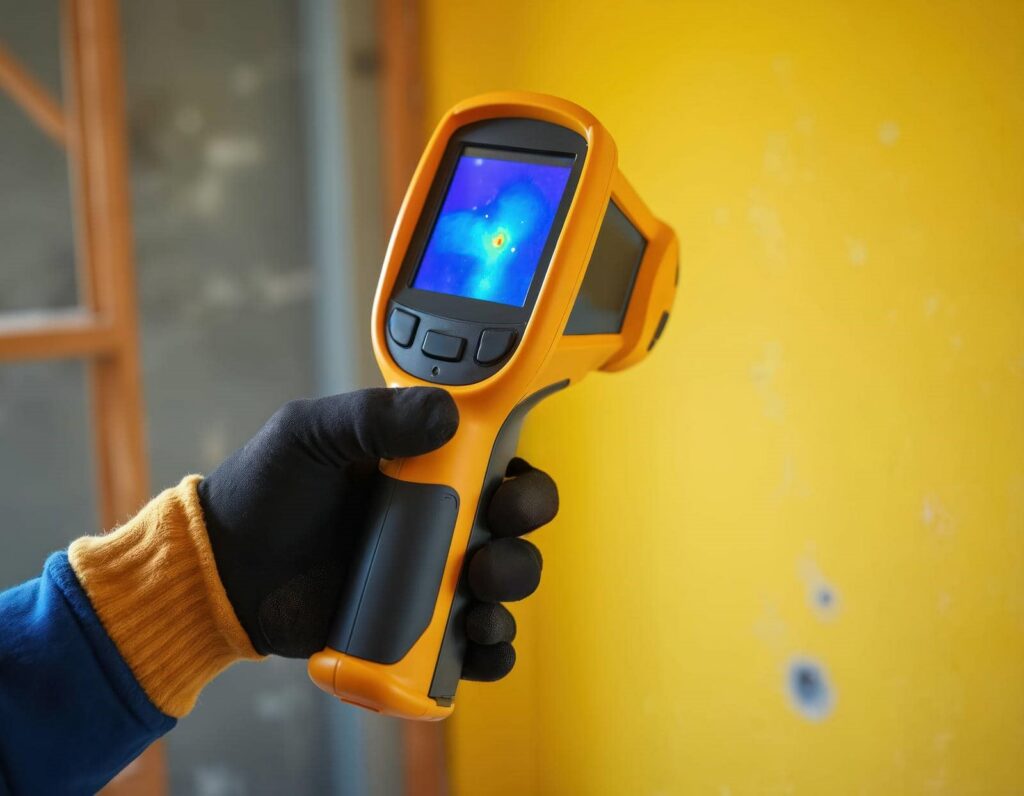
After water damage, you need to know where moisture is still hiding, not just where surfaces look wet. Moisture detection uses meters, infrared scans, and targeted inspection to find dampness behind walls, under flooring, and above ceilings. You can’t judge the full extent of damage by sight alone, and missed moisture can lead to mold or structural problems. The real issue is often deeper than it first appears.
Key Takeaways
- Moisture detection finds hidden water after damage using tools like infrared cameras, moisture meters, and targeted inspections.
- It reveals how far water has spread and whether materials are still trapped with moisture.
- It helps identify wet areas behind walls, under floors, above ceilings, and in other hard-to-see spaces.
- Early moisture detection speeds drying, limits mold growth, and reduces repair costs.
- It confirms which areas need immediate cleanup, water extraction, and targeted repairs.
Signs You Need Moisture Detection Right Away
If you notice musty odors, visible staining, peeling paint, warped flooring, or damp spots that keep returning, you need moisture detection right away.
These signs often point to a hidden water leak that’s already spreading behind walls, under floors, or above ceilings.
Don’t wait for the problem to settle; moisture can move fast and make simple repairs harder.
You’ll get better results when you use proven detection methods, like infrared scanning, moisture meters, and targeted inspections around plumbing, windows, and appliances.
If you’re seeing repeated symptoms, trust your instincts and act early.
You’re not overreacting—you’re protecting your space, your comfort, and your peace of mind.
Quick moisture detection helps you stay informed, confident, and connected to a safer home.
What Moisture Detection Reveals After Water Damage
Moisture detection reveals how far water has spread, where it’s trapped, and which materials have already been affected. You can use that data to prioritize water extraction and avoid wasting time on dry areas.
It also shows you whether drywall, flooring, or framing needs repair techniques beyond surface drying.
- You identify saturated zones before mold growth starts.
- You confirm which rooms need immediate cleanup.
- You choose targeted repair techniques that match the damage.
When you understand the full moisture picture, you can coordinate with your restoration team and make confident decisions.
That clarity helps you protect your space, reduce costs, and stay in control after a stressful loss.
How Moisture Meters Find Hidden Moisture
Even when a surface feels dry, a moisture meter can reveal hidden dampness beneath paint, behind drywall, or under flooring.
You use digital meters to measure electrical resistance or capacitance, and those readings help you spot moisture before it turns into a bigger problem.
These tools support non-invasive techniques, so you don’t need to cut open materials to check for water intrusion.
You simply place the probe or sensor against the surface, read the numbers, and compare them with a known dry baseline.
If the meter shows elevated levels, you can focus your response fast and with confidence.
That means you stay informed, protect your space, and work alongside professionals who understand how to verify drying progress accurately and efficiently.
Where Moisture Hides in Walls, Floors, and Ceilings
Once you’ve confirmed hidden dampness with a moisture meter, the next step is knowing where water tends to collect after a leak or flood. In your home, hidden moisture often settles behind baseboards, inside stud cavities, under subflooring, and above ceiling drywall.
Use moisture mapping to compare readings across nearby surfaces so you can trace spread patterns and spot wet zones that look normal from the outside.
- Wall corners, around outlets, and near plumbing chases
- Floor edges, under carpets, and at laminate seams
- Ceiling joints, light fixtures, and around attic penetrations
You’ll usually find the highest readings where materials meet or where gravity slows drainage. By checking these areas first, you can document damage faster and speak with contractors with confidence and belonging to a well-prepared recovery plan.
Why Fast Detection Helps Prevent Mold
The faster you find hidden water, the less time mold has to start growing on damp materials. When you act quickly, you cut off the moisture mold needs to spread through drywall, wood, and insulation.
That means you can dry the area before colonies form, which lowers cleanup costs and reduces the chance of lingering odors. Fast moisture detection also helps you protect indoor air quality, since mold spores can trigger health risks for your family or team.
Use meters, thermal imaging, and visual checks right away after a leak, flood, or burst pipe. If you belong to a property owner or response crew, quick action keeps everyone on the same page and helps your space return to normal sooner.
Frequently Asked Questions
How Long Does Moisture Detection Usually Take?
Usually, you’ll spend 15–60 minutes on a moisture assessment, depending on room size and damage spread. You’ll use drying techniques after readings, and tougher cases may take a few hours to verify hidden moisture.
Can Moisture Detection Find Leaks Behind Concrete?
Yes, you can use leak detection to find leaks behind concrete. You’ll measure concrete moisture with specialized meters, thermal imaging, or tracer gases, helping you pinpoint hidden plumbing issues quickly and confidently.
Do All Water Damages Require Professional Moisture Inspection?
No, you don’t need professional moisture inspection for every water damage case, but you should verify the theory that visible drying means safety; hidden moisture levels can still cause damage, so you’ll fit in better with experts.
Is Moisture Detection Covered by Homeowners Insurance?
Often, yes—your homeowners policy may cover moisture detection if it’s tied to a covered loss. You’ll want to review insurance coverage, start the claim process quickly, and document damage to protect your claim.
What Equipment Is Used During a Moisture Inspection?
You’ll use moisture meters and thermal imaging to spot hidden dampness. Inspectors may also bring pin-type probes, infrared cameras, and hygrometers, so you can identify wet materials fast, verify drying, and protect your property.
Summary
When you spot water damage, you need moisture detection right away so you can catch hidden dampness before it spreads like a whisper through a wall. You’ll use moisture meters and infrared scanning to find wet materials behind drywall, under flooring, and above ceilings. That quick check helps you target drying, reduce mold risk, and protect structural integrity. By confirming what’s still wet, you’ll make cleanup faster, safer, and more effective.