
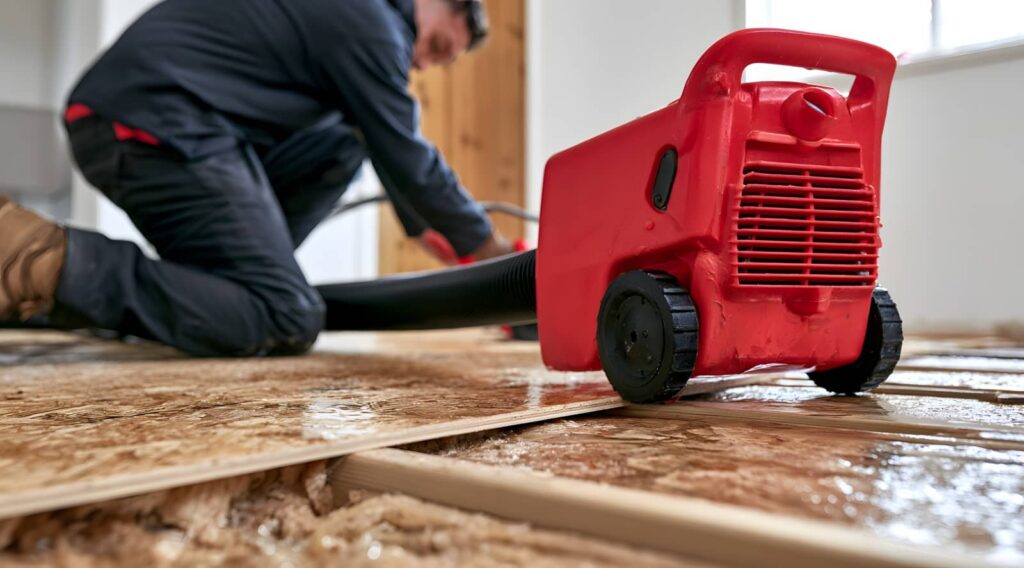
You need to remove standing water, clear soaked materials, and start Water Damage Drying fast. Focus on walls, floors, and hidden cavities before moisture spreads deeper into the structure. Then use fans and dehumidifiers together to move air and pull humidity down. The difference between a clean recovery and lingering damage often comes down to the first few hours, and one overlooked step can change everything.
Key Takeaways
- Start drying immediately after shutting off the water to reduce mold growth and structural damage.
- Remove soaked items and open windows to improve airflow and speed evaporation.
- Use fans to move air across wet surfaces and dehumidifiers to pull moisture from the room.
- Check walls, floors, and hidden areas with a moisture meter to confirm all dampness is gone.
- Monitor drying daily and adjust equipment to prevent secondary damage and costly repairs.
Start Water Damage Drying Right Away
The sooner you start drying water-damaged areas, the better chance you have of limiting structural damage and mold growth. You should act within hours, not days, to support mold prevention and reduce cleanup costs.
First, shut off the water source if you can do so safely. Then begin water extraction with a wet vacuum, pump, or towels, depending on the amount of standing water. Remove soaked items that you can move, and clear the area so air can circulate.
Open windows if outdoor conditions help drying, and run fans or dehumidifiers right away. Check hidden spaces, since trapped moisture can keep the problem going.
When you move fast, you protect your home and join the group of owners who handle damage smartly.
Dry Walls, Floors, and Wet Materials
Once you’ve removed standing water, focus on drying walls, floors, and wet materials before moisture spreads deeper into the structure. You should check each surface with a moisture assessment tool, then mark any soft, swollen, or stained areas for material restoration.
Work methodically so you and your crew stay aligned and no damp section gets missed.
- Inspect drywall edges, baseboards, and trim for hidden saturation.
- Lift loose flooring and separate wet materials from dry ones.
- Remove porous items that can’t return to safe moisture levels.
Keep your process tight, documented, and consistent. When you verify what’s still wet, you reduce repair errors and protect the build from secondary damage.
You’re not just drying a room—you’re restoring a space your team can trust.
Speed up Drying With Fans and Dehumidifiers
Position fans to move air across damp surfaces and set dehumidifiers to pull moisture from the room as quickly as possible.
You’ll dry materials faster when you create steady airflow over walls, baseboards, and flooring. Aim fans so they sweep moisture away, not just stir it around.
Keep doors open between affected spaces if you need better air circulation techniques, but isolate unaffected rooms to keep humidity down.
Empty dehumidifier tanks often, or run a drain hose for nonstop moisture removal. Check humidity with a meter and keep it low until surfaces feel dry.
These moisture control methods help you avoid lingering dampness, warping, and mold growth.
Work together as a team, monitor progress daily, and adjust equipment placement until the space dries evenly.
Frequently Asked Questions
How Do I Tell if Water Has Reached Hidden Structural Cavities?
You’ll spot hidden cavities by checking moisture meters, thermal imaging, soft or swollen surfaces, musty odor, and unexplained staining. If readings stay high, hidden leaks may be compromising structural integrity, so inspect further.
When Should I Call a Professional Water Damage Restoration Company?
Call a professional water damage restoration company right away if you’ve got flooding, sewage, hidden cavities, or damp materials beyond 24 hours. They’ll provide emergency response, damage assessment, and help you protect your space together.
Can I Safely Salvage Electronics After Water Exposure?
You can sometimes salvage electronics, but treat them like a house of cards. Power them off, remove batteries, and use drying techniques. For electronic recovery, you’ll need prompt inspection, corrosion control, and professional help if water’s contaminated.
How Do I Prevent Mold Growth After the Area Dries?
You prevent mold growth by keeping moisture control tight: remove wet materials, clean surfaces, dehumidify, and ventilate. Watch hidden dampness, fix leaks fast, and inspect daily so you’re staying protected together.
What Insurance Documentation Should I Collect After Water Damage?
Think of your claim process as a trail map: collect photos, videos, repair estimates, receipts, inventory lists, and communication logs. You’ll also want your policy coverage details and adjuster reports to speed approval and feel supported.
Recap
Start drying water damage right away so you can limit secondary damage and mold growth. Remove standing water, pull out soaked materials, and open the area for airflow. Then dry walls, floors, and contents with fans and dehumidifiers, adjusting equipment as moisture drops. Keep checking humidity and document progress until everything is fully dry. If you act quickly, you’re not just cleaning up water—you’re steering your property back to safety and stability.