
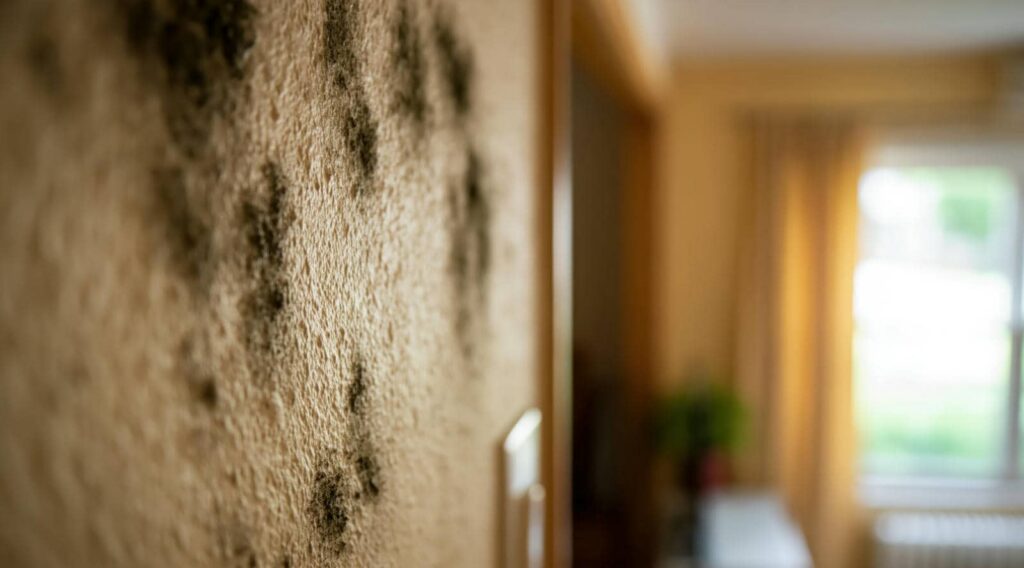
Mold Prevention starts with acting quickly after water damage to keep moisture from turning into a mold problem. Remove standing water with a pump or wet vacuum, thoroughly dry all affected surfaces using fans and dehumidifiers, and disinfect the area with an appropriate cleaner. These steps help stop mold before it has a chance to spread, but hidden moisture in walls, flooring, or other concealed spaces can still cause problems if it’s left untreated.
Key Takeaways
- Remove standing water immediately using pumps, wet vacs, or towels to stop mold from starting.
- Dry walls, floors, and fixtures quickly with fans, dehumidifiers, and open airflow.
- Disinfect all water-damaged surfaces, especially if contaminated water was involved.
- Replace damaged materials with mold-resistant products like drywall, insulation, or flooring.
- Control humidity with ventilation and dehumidifiers to keep moisture levels low.
Remove Standing Water Fast
Act quickly to remove standing water, since the longer it remains, the greater the chance mold has to start growing.
You should begin water extraction as soon as it’s safe, using pumps, wet vacs, or towels to pull water out of the space. Focus on low spots, hidden corners, and any pooled areas that can keep feeding mold.
Keep your team’s efforts coordinated so no wet pockets get missed, and check the area often during cleanup. Strong moisture control starts here, because even a thin film of water can support growth.
If you stay consistent and work methodically, you’ll cut the risk fast and help your home recover with less stress. You’re not handling this alone; careful action now protects everyone’s shared space.
Dry Walls, Floors, and Fixtures
Once the standing water is gone, focus on drying every damp surface as quickly and evenly as possible.
Pull baseboards slightly if you can, lift rugs, and move furniture to let air reach hidden spots. Use fans to push air across walls and floors, and open windows only when outside air is drier than indoor air.
A dehumidifier helps with moisture control, especially in closed rooms and basements. Check wood, drywall, tile grout, and metal fixtures for lingering dampness, then keep airflow steady until each surface feels fully dry.
Practical ventilation strategies make the job easier and help your home recover faster. You’re not doing this alone—steady drying protects the space you share and keeps small problems from becoming bigger ones.
Disinfect and Prevent Mold Growth
After drying, disinfect any surfaces that may have contacted contaminated water to reduce the chance of mold taking hold. Use a cleaner approved for the material, then apply a disinfectant that targets bacteria and fungal spores.
Wear gloves, eye protection, and a mask, and keep the area well ventilated while you work. Scrub porous edges, seams, and hidden corners where moisture lingers.
Once clean, dry everything again so no dampness remains. If you replace damaged items, choose mold resistant products for drywall, insulation, and flooring.
Add ventilation improvements such as exhaust fans or dehumidifiers to keep humidity low. You’re not handling this alone; these steps help you protect your space, restore comfort, and stop mold before it starts.
Frequently Asked Questions
How Long Does Mold Take to Grow After Water Damage?
Mold can start growing within 24 to 48 hours after water damage, depending on mold growth timeline and water damage factors. You can act fast, dry surfaces completely, and protect your space confidently.
Should Insurance Cover Mold Remediation Costs?
Usually, yes—if your insurance policies include mold coverage and the damage came from a covered event. You should review exclusions, file promptly, and document conditions; that small coincidence can strengthen your claim and confidence.
Can Hidden Mold Affect Indoor Air Quality?
Yes—hidden mold can lower your indoor air quality. Different mold types release spores and odors that you breathe in. You can improve conditions with air purification, drying, and prompt inspection, and you’re not alone.
When Should Professionals Inspect for Mold?
You should call for a mold inspection as soon as you smell musty odors, spot visible growth, or stay damp over 24 hours; a professional assessment confirms hidden risks and keeps you feeling secure.
What Materials Are Hardest to Salvage After Flooding?
You’ll find flood damaged materials like drywall, insulation, carpet, and particleboard are hardest to salvage. You can often save solid wood, metal, and glass salvageable items if you dry them quickly and inspect them closely.
Final Thoughts
In the aftermath of water damage, you can stop mold before it starts by acting fast. Remove standing water with pumps or a wet vac, then dry walls, floors, and fixtures with fans and dehumidifiers until everything is fully dry. Next, disinfect affected areas with the right cleaner. If you keep ventilation strong and replace damaged materials when needed, you’ll protect your space and prevent future mold, like sealing a castle gate before trouble can rush in.