
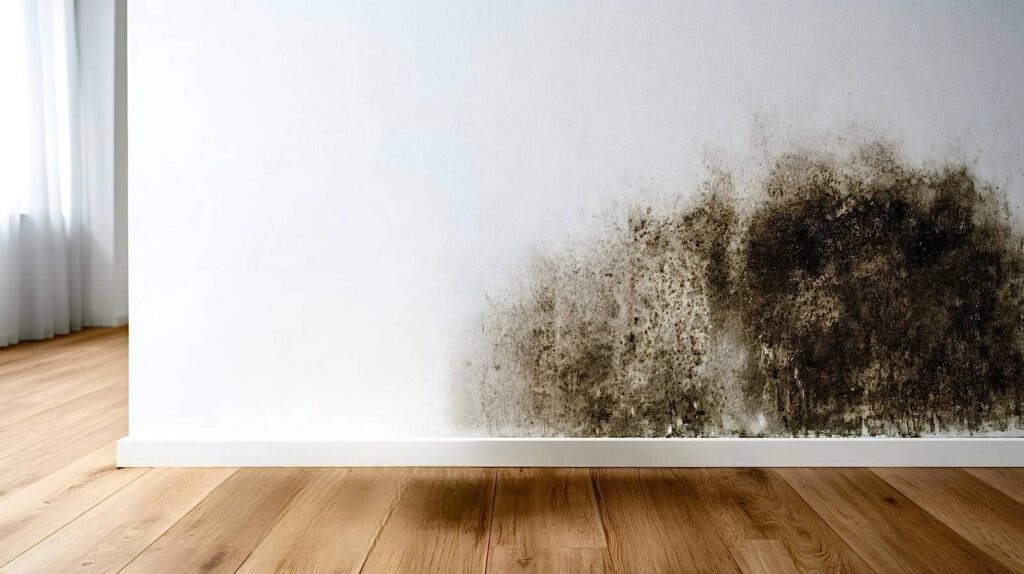
Emergency Mold Prevention starts with stopping the water, removing excess moisture, and drying the affected area as quickly as possible. Fast action is essential because mold can begin growing within hours when surfaces remain wet. Use fans and dehumidifiers to speed up drying, keep indoor humidity below 60%, and clean hard surfaces with soap and water before applying a disinfectant. Be sure to inspect hidden areas as well, since mold often develops behind appliances, inside closets, and in other places that aren’t immediately visible.
Key Takeaways
- Stop the water source immediately and remove standing water with towels or a wet vacuum.
- Dry affected areas fast using fans, dehumidifiers, and open windows when outdoor humidity is lower.
- Keep indoor humidity below 60% to slow mold growth and protect hidden damp spaces.
- Clean hard surfaces with soap and water, then disinfect and dry them completely.
- Inspect behind appliances, under sinks, and inside closets for hidden moisture or early mold signs.
Stop Water Damage and Remove Standing Moisture
Cut off the water source immediately and remove any standing moisture as fast as possible. You need to shut off valves, stop leaks, and isolate the affected area so water doesn’t keep spreading.
Use towels, a wet vacuum, or professional water extraction equipment to pull out pooled water from floors, carpets, and low spots. Check behind appliances and along baseboards, because hidden water can keep feeding damage.
Remove soaked items that trap moisture and place them in a dry, ventilated space. Track indoor humidity and use humidity control tools to keep levels from climbing.
Work methodically, and you’ll protect your space and support your team’s recovery. Fast action limits secondary damage and gives you a cleaner start for the next steps.
Dry Wet Areas Fast to Prevent Mold
Once standing water is gone, you need to dry every wet surface as quickly as possible to stop mold from taking hold. Use fans to move air across floors, walls, and trim, and keep windows open when outdoor humidity is lower.
Pair this with dehumidifier usage to pull moisture from the room and keep indoor relative humidity below 60%.
Focus on ventilation improvement in closed spaces like closets, bathrooms, and utility rooms, where damp air lingers. Lift rugs, prop cabinet doors open, and separate items so airflow reaches hidden edges.
Check moisture in padding, drywall, and wood with your hand or a meter.
Drying fast protects your home and helps you stay ahead together.
Clean Surfaces and Watch for Hidden Mold
After drying, clean hard surfaces with soap and water to remove dirt and mold spores, then rinse and dry them completely.
Use this surface cleaning step on counters, tile, furniture, and tools that got wet. If you use a disinfectant, follow the label and keep the area ventilated.
Next, inspect nearby trim, drywall edges, and under sinks for hidden mold. You may see staining, musty odors, or soft spots before growth becomes obvious.
For reliable mold detection, check behind appliances, inside closets, and around insulation seams where moisture lingers.
If you find porous materials with contamination, remove them instead of scrubbing.
Stay systematic, because your crew and household need the same clean, dry standard. Regular checks help you catch problems early and protect your space.
Frequently Asked Questions
When Should I Call a Professional for Mold Inspection?
Call a professional for mold inspection when you smell musty odors, see visible growth, or after water damage lasting over 24 hours. You’ll get professional services that identify hidden contamination, protect your home, and restore confidence.
Can Mold Start Growing Within 24 Hours After Flooding?
Yes—mold can start within 24 hours after flooding, like a spark in dry grass. You’ll shorten the mold growth timeline by using fast flood response strategies: remove water, dry materials, and keep humidity low.
Which Materials Are Impossible to Fully Dry at Home?
You can’t fully dry heavily soaked drywall, insulation, carpet pad, and particleboard at home; their moisture retention promotes mold growth. You’ll usually need removal and replacement, plus professional drying for structural wood and hidden cavities.
Should I Throw Away Items With Visible Water Stains?
Yes—you should discard items with visible water stains if they’re porous or smell musty, because water damage can hide mold growth. For nonporous items, clean, dry, and monitor them during mold remediation.
How Do I Document Damage for an Insurance Claim?
Can’t you make the claim stronger? You should complete claim forms, photograph every damaged item, note dates, and keep receipts. You’ll build clear photo evidence, document losses accurately, and feel confident your insurer sees the full picture.
Conclusion
When water hits, you’re racing the clock. Stop the source, pull out standing moisture, and dry everything fast with fans and dehumidifiers. Keep indoor humidity below 60%, and you cut mold’s chances fast. Then clean surfaces with soap and water, disinfect them, and check hidden spots behind appliances and inside closets. If the room feels dry, looks clean, and smells right, you’re doing it right—before mold ever gets a chance to settle.