
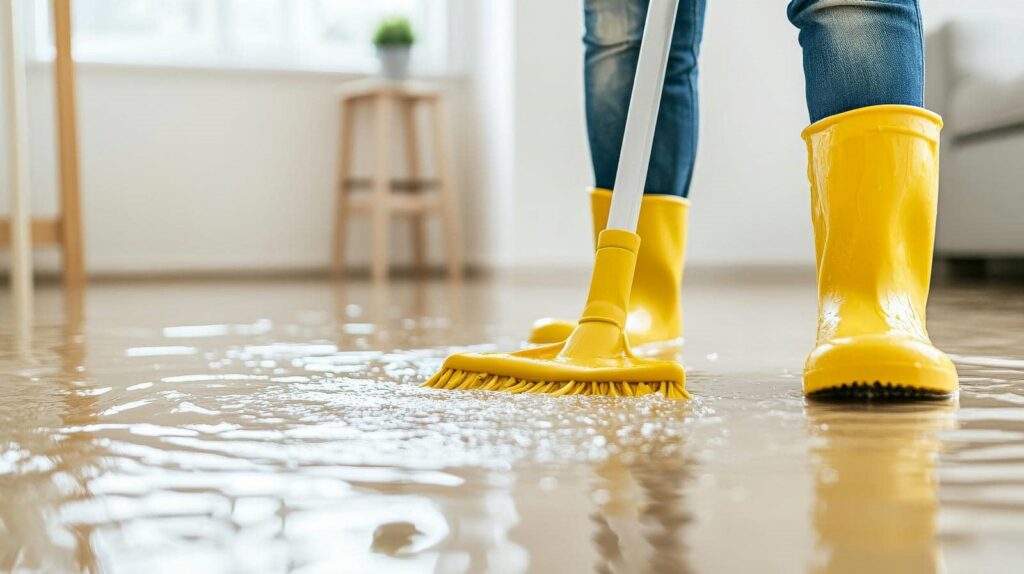
When you encounter a water emergency, every second counts. You need to assess the situation quickly and take immediate action to minimize damage. Start by shutting off the main water supply and the power in affected areas. Safety is paramount, so don’t forget to wear protective gear. From there, efficient removal of standing water is essential. Understanding the right tools and techniques will make a significant difference, especially when it comes to preventing further issues.
Key Takeaways
- Act quickly to remove standing water using mops, buckets, or specialized pumps to minimize damage risks.
- Shut off the main water valve and disconnect power to prevent electrical hazards during water removal.
- Use wet vacuums for efficient extraction in smaller areas, ensuring strong motors and large tanks for effectiveness.
- Thoroughly dry the affected area with fans and dehumidifiers to prevent mold growth and lingering moisture.
- Document all damage meticulously for insurance claims and restoration efforts, enhancing your chances of fair compensation.
Assess the Situation Quickly
When you first encounter a water emergency, how quickly can you assess the situation? Your initial assessment is essential. Start by identifying the source of the water—whether it’s a burst pipe, flooding, or a leak.
Quickly evaluate the extent of the water damage. Is it contained to one room, or is it spreading? Check for any potential hazards, such as electrical wires or structural damage, as part of your risk evaluation.
Look for signs of contamination, like sewage or chemicals, which could pose health risks. If you’re unsure about the safety of the area, prioritize your well-being and that of others.
Document what you find, as this information will be important for insurance claims and restoration efforts. Remember, staying calm and organized during this initial assessment can make a significant difference in managing the situation effectively.
You’re not alone; many have faced similar challenges and emerged resilient.
Shut Off Power and Water Sources
Before you tackle the water removal process, it’s vital to shut off the power and water sources to prevent further damage and assure safety.
Start by locating your main water valve, usually found in the basement or near your home’s foundation. Turn this valve clockwise to stop the water flow.
Next, confirm your safety by disconnecting the power supply; this is essential to avoid any electrical hazards while you’re working in a wet environment. Find your circuit breaker panel and switch off the breakers that provide power to the affected areas.
If necessary, you can also unplug any electrical appliances in those spaces. By taking these steps, you’re not only protecting your home but also safeguarding yourself and your loved ones.
Use Proper Safety Gear
Using proper safety gear is vital during the water removal process to protect yourself from potential hazards. Before you begin, make certain you have the right safety equipment on hand.
Start with waterproof boots to keep your feet dry and prevent slips. Wear gloves, preferably rubber or latex, to shield your hands from contaminants in the water. Protective clothing, such as a durable rain suit or coveralls, will help keep you safe from any debris or harmful substances.
Don’t forget a mask or respirator, especially if you’re dealing with mold or mildew. Eye protection is also important, as water can splatter and contain harmful particles.
Remove Standing Water Promptly
After ensuring you’re properly equipped with safety gear, it’s time to tackle standing water without delay. Standing water poses significant dangers, including mold growth and structural damage. To protect your home and health, act quickly.
Begin by identifying the source of the water and stopping it if possible. Then, use effective water extraction techniques to remove the water as swiftly as you can. Whether it’s a mop, bucket, or specialized equipment, the key is to eliminate the water to minimize risks.
Be mindful of electrical hazards; never enter water that’s close to electrical outlets or appliances. Once you’ve removed the bulk of the water, dry the area thoroughly to prevent further complications.
Keeping your living space safe and habitable is essential, and prompt action against standing water is your first line of defense. Remember, the sooner you act, the less damage you’ll face.
Utilize Pumps and Wet Vacuums
While you may face challenges during water removal, utilizing pumps and wet vacuums can considerably expedite the process.
Start with pump selection; choose a submersible pump for deeper water or a utility pump for shallower areas. Confirm your pump’s capacity matches the volume of water you’re dealing with—this can make all the difference.
Next, consider vacuum types. Wet vacuums are ideal for smaller areas, allowing you to suck up excess water effectively.
Look for a vacuum with a strong motor and a large tank to minimize the need for frequent emptying. Remember to check the hose length to reach all corners of the affected area.
Dry Out Affected Areas Thoroughly
Once you’ve effectively removed the standing water with pumps and wet vacuums, it’s time to focus on drying out the affected areas thoroughly.
Start with a moisture assessment to identify damp spots that need extra attention. Use dehumidifiers to extract moisture from the air, and consider placing fans strategically to enhance air circulation. This will help speed up the drying process and prevent lingering moisture.
Make certain to open windows and doors if weather permits, allowing fresh air to flow through and assist in evaporation.
Don’t forget to check hidden areas like under furniture and behind walls, as moisture can hide there. Regularly monitor the humidity levels with a hygrometer to guarantee you’re on the right track.
Prevent Mold Growth
To prevent mold growth after water damage, you need to promptly remove any excess water from affected areas.
Keeping humidity levels low is essential, as mold thrives in damp environments.
Use dehumidifiers and guarantee proper ventilation to create an inhospitable atmosphere for mold.
Promptly Remove Excess Water
When water infiltrates your space, acting swiftly to remove excess moisture is essential in preventing mold growth.
Start by employing effective water extraction techniques, like using wet vacuums or pumps, to eliminate standing water. Make certain you address hidden areas, such as behind walls and under carpets, as mold thrives in damp environments.
Your emergency response planning should include gathering necessary tools and materials beforehand, so you’re ready to act. Don’t hesitate to reach out to professionals if the situation overwhelms you.
Maintain Low Humidity Levels
After removing excess water, maintaining low humidity levels is essential in preventing mold growth. You should aim for indoor humidity levels between 30-50%.
Using dehumidifiers can greatly aid in humidity control, especially in damp areas. Regularly check hygrometers to monitor moisture levels in your space. Proper ventilation is also key; open windows when possible and use exhaust fans in areas like kitchens and bathrooms.
For effective moisture management, promptly address any leaks or spills, and guarantee your home’s drainage systems work efficiently.
Document Damage for Insurance Claims
After a water emergency, it’s vital to document the damage for your insurance claim.
Start by photographing all affected areas to create a visual record, and make an inventory of damaged items with detailed descriptions.
This thorough documentation will help streamline the claims process and guarantee you receive the compensation you deserve.
Photograph Affected Areas
How can you guarantee that your insurance claim accurately reflects the extent of water damage? One effective way is to utilize proper photograph techniques for affected area documentation.
Start by capturing wide-angle shots to show the overall damage, then zoom in on specific areas to highlight critical details. Make sure you take photos from multiple angles and at different times of day to document any changes.
Include timestamps and descriptions for each photo, as this adds context to your claim. Remember, clear and organized documentation can greatly strengthen your case.
Inventory Damaged Items
To guarantee your insurance claim accurately captures the extent of your losses, it’s crucial to create a thorough inventory of damaged items. Start by using effective inventory methods, like listing items room by room. For each item, note the description, quantity, and condition.
Include photographs to bolster your documentation. For item valuation, research replacement costs to ascertain you’re capturing accurate figures. Don’t forget to include personal belongings, furniture, and electronics—anything affected by the water damage.
Keep your inventory organized, as this will streamline the claims process and help you feel more in control. By meticulously documenting your losses, you enhance your chances of receiving fair compensation and ultimately restoring your cherished belongings.
Call in Professional Help if Necessary
While you may feel equipped to handle minor water issues on your own, there are situations where professional help is imperative. If you encounter extensive flooding or mold growth, it’s vital to call in experts. A professional assessment can identify hidden damage that you might overlook, ensuring a thorough evaluation of the situation.
Emergency restoration services not only remove water efficiently but also help prevent further issues, like structural damage or health risks associated with mold. Their specialized equipment and training mean they can tackle problems quickly and effectively, giving you peace of mind.
Don’t hesitate to reach out for help if you feel overwhelmed. The sooner you involve professionals, the better your chances of mitigating damage and restoring your home.
Implement Preventative Measures for the Future
Implementing preventative measures can greatly reduce the risk of future water damage in your home. Start by investing in effective waterproofing techniques for your basement and foundation. This can include applying sealants and installing membranes to block moisture.
Additionally, consider upgrading your drainage systems. Properly designed gutters and downspouts direct water away from your home, preventing pooling around the foundation.
Regularly inspect and maintain these systems to guarantee they function correctly. You should also clear debris from gutters and check for blockages in drainage pipes.
Another key measure is landscaping; verify that your yard slopes away from your home to facilitate water runoff.
Lastly, take time to educate yourself and your family about potential water hazards, fostering a culture of awareness.
Frequently Asked Questions
How Can I Identify Hidden Water Damage in My Home?
You can identify hidden water damage by using moisture assessment tools and conducting water detection tests in suspicious areas. Look for discoloration, peeling paint, or musty odors, as these often indicate underlying moisture issues.
What Should I Do if I Can’t Remove All the Water?
If you can’t remove all the water, consider applying water extraction techniques like pumps or wet vacs. Use temporary solutions like towels or fans to mitigate damage while waiting for professionals to assist you further.
Are There Specific Products for Odor Removal After Water Damage?
Yes, you can use odor neutralizers and moisture absorbers specifically designed for water damage. Look for products that contain activated charcoal or baking soda, as they effectively eliminate lingering odors and absorb excess moisture in your space.
How Long Can Water Sit Before It Causes Significant Damage?
Water can sit like a ticking time bomb, causing significant damage within 24 to 48 hours. Time factors play a vital role; the longer you wait, the more extensive the water damage becomes. Act swiftly!
What Should I Do With Furniture Exposed to Water?
Remove wet furniture from water exposure, and use drying techniques like fans and dehumidifiers to accelerate restoration. Clean and sanitize surfaces, then inspect for damage; early action can greatly enhance your furniture’s longevity and appeal.
Wrap-Up
In emergencies, every second counts. Did you know that up to 50% of homes experience water damage at some point? By following these tips for effective water removal, you can greatly minimize damage and protect your property. Always prioritize safety, act swiftly to remove standing water, and consider preventative measures to avoid future issues. If the situation feels overwhelming, don’t hesitate to call in professionals they can provide expertise and resources to restore your space efficiently.