
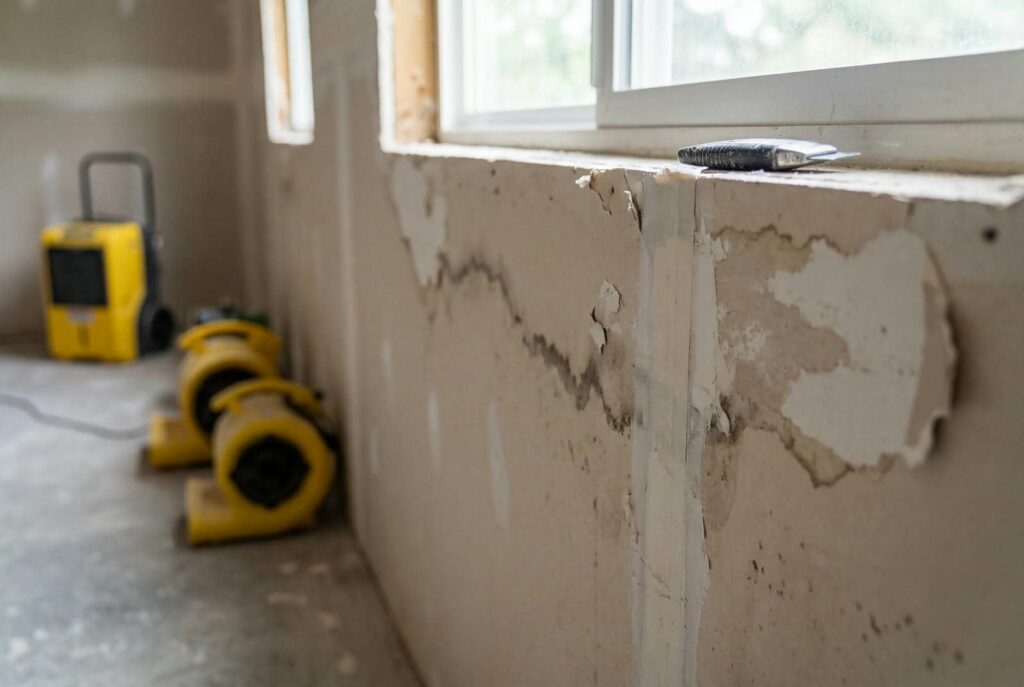
When water hits your home, you need to act in the first hour: shut off the source, cut power to affected areas, and remove wet materials before they trap moisture. Then you can place the right air movers and dehumidifiers, control airflow, and check hidden dampness in walls and floors. If you miss a step, mold and structural damage can spread fast, so the next move matters.
Key Takeaways
- Shut off water and electricity immediately, document damage, and keep people out of saturated areas for safety.
- Remove soaked insulation, carpet, padding, and other porous materials to speed drying and prevent hidden moisture.
- Use high-capacity air movers and dehumidifiers, positioned for strong airflow across floors, walls, and cavities.
- Check moisture daily with meters and adjust equipment placement until readings stabilize and humidity stays below 50%.
- Call a professional if drying stalls, odors persist, or damage is widespread and mold risk increases.
What to Do in the First Hour
In the first hour, shut off the water source, cut power to any affected circuits if it’s safe to do so, and document the damage with photos before you move anything.
Then you should notify your emergency contacts and your restoration partner, so your crew can coordinate fast. Save receipts, note the time, and record what rooms are impacted; this supports insurance claims and speeds approval.
Keep people out of saturated areas, and don’t start cleanup that could disturb evidence. Open windows only if conditions are dry outside and it won’t worsen exposure.
You belong in control here: gather key documents, list affected belongings, and create one clear incident log.
Follow the plan step by step, stay calm, and prepare for the next drying phase.
Stop the Water and Make the Area Safe
Shut off the main water supply at once, then isolate any branch lines or fixtures that are still feeding the wet area if you can do so safely.
Next, cut power to affected circuits at the breaker panel, and don’t enter standing water if electrical equipment is present.
Put on gloves and boots, keep children and pets out, and mark the perimeter so no one slips or reenters too soon.
Call your plumber, insurer, or restoration team to coordinate emergency response and document the source.
Verify water safety before you work near appliances, outlets, or HVAC components.
If a leak came from a burst line, freeze damage, or failed fixture, keep the shutoff closed until a qualified technician clears the system.
Your crew stays safer when you control the hazard first.
Remove Wet Materials Before Drying
Pull out soaked insulation, carpet, padding, rugs, cardboard, and other porous items first, because they hold moisture and slow structural drying. You’ll protect the building and help your crew move faster.
Use wet material assessment to sort what stays and what goes. Then perform moisture content analysis on framing, subfloor, and drywall edges to confirm saturation.
- Remove debris that traps water.
- Bag salvageable porous items separately.
- Mark unsalvageable materials for disposal.
- Recheck adjacent surfaces for hidden dampness.
Stay organized so everyone on site knows the plan and can work as one.
When you clear the wet load early, you reduce odor, limit wicking, and make the next drying step far more effective.
Choose the Right Drying Equipment
Choose drying equipment based on the size of the area, the amount of moisture, and the materials affected. You’ll get better results when you match equipment types to the job, so start with high-capacity air movers for broad surface evaporation and dehumidifiers for moisture removal.
In tight or enclosed spaces, use low-profile units that fit safely and maintain airflow. Check power demands, drainage options, and noise limits before you set up.
Place units to support cross-flow and steady circulation, then monitor readings to confirm drying efficiency. If conditions change, adjust your lineup fast so your team stays on track.
When you choose the right tools, you protect the structure, save time, and keep the restoration process moving together.
How to Dry Walls, Floors, and Framing
Start by drying wall cavities with targeted air movement and controlled dehumidification, and remove baseboards or open access points if needed to expose wet materials.
Pull moisture from floors with extraction, surface drying, and steady airflow across the affected area until readings drop.
For framing, you should direct air through stud bays and joists to eliminate trapped moisture and prevent hidden damage.
Wall Drying Techniques
To dry walls effectively, you need to remove trapped moisture from the cavity, surface, and adjacent framing as quickly as possible. Start by checking wall moisture with a meter, then open wet cavities at the lowest safe point. Use these drying techniques to keep air moving and evaporation steady.
- Remove baseboards and drill inspection holes.
- Position air movers to push dry air across both sides.
- Run dehumidifiers to control humidity in the room.
- Monitor readings until materials return to safe levels.
You’ll work faster when you isolate wet zones and verify progress daily. Keep insulation, drywall, and framing exposed until readings stabilize.
If you stay consistent, you’ll support a safer, cleaner dry-out and help your team restore the wall system with confidence.
Floor Moisture Removal
When floor materials soak up water, you need to pull moisture out of the assembly fast so subflooring, underlayment, and framing don’t stay wet longer than necessary.
Start moisture detection at seams, edges, and fastener points, then map readings across the floor. Remove finish flooring only if it traps water or blocks access.
Lift saturated padding, mop standing water, and expose the wet layer beneath. Place low-profile air movers along the surface and run dehumidification to control vapor.
For dense flooring materials, drill only where approved and monitor temperature and relative humidity. Recheck readings every few hours and keep the area contained so your crew works as one.
Stop when measurements return to normal and surfaces feel dry, not cool or clammy.
Framing Airflow Methods
After you expose the wet framing, you need to move air so moisture leaves the wood, sheathing, and cavities before deterioration begins. Position axial fans to create crossflow through wall bays, floor joists, and stud lines. Aim the stream across framing materials, not straight at surfaces, so evaporation stays steady.
Monitor airflow dynamics with moisture meters and adjust openings when resistance blocks circulation.
- Remove insulation and debris.
- Open baseboards, drill dry-out holes, or cut vents.
- Place dehumidifiers to capture released vapor.
- Recheck moisture daily until readings stabilize.
Keep air moving continuously, but don’t overcool the assembly. You’re part of the crew that protects the structure, so verify each zone dries evenly and no hidden pocket stays damp.
Set Up Fans and Dehumidifiers
Place fans so they push air across wet surfaces and through cavities, not directly into corners where moisture can stall.
Position dehumidifiers in the driest, central area you can access, with doors closed to concentrate moisture removal.
You’ll need steady airflow and continuous dehumidification to lower humidity and speed structural drying.
Fan Placement Strategy
Start with a balanced drying layout: position fans to create steady airflow across wet surfaces and aim dehumidifiers at the center of the affected zone to pull moisture from the air efficiently.
Keep your fan orientation low and slightly angled so airflow patterns sweep along floors, walls, and framing without blasting debris. You’re part of the crew now, so work methodically:
- Space fans to overlap drying zones.
- Point each fan along a clear path.
- Avoid direct face-to-face fan placement.
- Recheck airflow after the first hour.
Adjust positions if you find dead spots, rattling material, or weak circulation.
Hold a consistent pattern, document changes, and keep the setup stable so the structure dries evenly and efficiently.
Dehumidifier Positioning
Set dehumidifiers in the most open part of the affected area, ideally near the center of the moisture zone, so they can pull humid air evenly from the whole space.
Choose the right dehumidifier types for your job: refrigerant units for warm spaces, desiccant units for cooler conditions, and larger capacity models for heavy saturation.
Keep ideal placement clear of walls, furniture, and tight corners so the unit can operate without restriction.
Run the machine on a stable, level surface and confirm the drain path is secure.
You’ll dry faster when the equipment is sized correctly and positioned for easy access during checks.
Stay with your team’s plan, verify readings daily, and adjust placement only if the drying pattern shows uneven progress.
Airflow And Moisture Control
Once the dehumidifier is in position, you need to manage airflow so the equipment can remove moisture efficiently. Place fans to push damp air across wet surfaces and toward the dehumidifier intake.
Follow airflow principles: move air in a loop, avoid dead zones, and keep paths open around walls and furnishings. You’ll protect the work area and help the crew stay coordinated.
- Aim fans low across floors and baseboards.
- Angle airflow through rooms, not directly at the dehumidifier.
- Seal exterior openings to hold conditioned air inside.
- Check moisture measurement daily and adjust fan placement.
Keep relative humidity dropping, and reset equipment if readings stall. When you control airflow and moisture together, you speed drying and stay aligned with the rest of the team.
Find Hidden Moisture in Walls and Floors
Where’s moisture hiding after a leak or flood? You trace it with moisture detection tools, then check baseboards, drywall seams, subfloors, and insulation edges for hidden leaks.
Use a pin meter on wall faces and a noninvasive scanner on floors to map wet zones without opening everything at once. Mark readings above normal, then compare adjacent areas to find migration paths.
If trim feels cool or boards sound hollow, probe further. Remove a small inspection panel where readings peak, and verify the material depth. You’re not guessing; you’re confirming.
Work methodically, document each reading, and keep your crew aligned so everyone knows the next test point. That shared process helps you move fast, protect the structure, and dry the right spots first.
Prevent Mold During Drying
As you dry the structure, control humidity and airflow so mold can’t take hold in damp materials. You’re part of a careful crew when you apply mold prevention techniques with consistent monitoring and quick adjustments.
Use humidity control strategies to keep indoor levels below 50% and keep air moving across wet surfaces.
- Run dehumidifiers continuously.
- Set fans to sweep air through cavities.
- Remove saturated porous items fast.
- Inspect daily for condensation or odor.
You should isolate drying zones, seal off clean areas, and replace wet filters so spores don’t spread.
Check wood, drywall, and subfloors with meters, then recheck after each drying cycle.
When you stay disciplined, you protect the build, support the team, and finish with a drier, healthier structure.
When to Call a Water Damage Pro
If drying stalls, damage looks widespread, or you spot mold, call a water damage pro right away.
You need a water damage assessment when moisture readings stay elevated after 24 to 48 hours, materials feel soft, or odors persist. A pro can map hidden wet zones, test structural components, and set the correct drying targets before secondary damage starts.
You should also request professional services if water reached insulation, subfloors, electrical systems, or HVAC spaces. These jobs need controlled extraction, demolition, and antimicrobial treatment you can’t safely improvise.
Acting fast helps your home recover cleanly, and it puts you with a team that knows the process. When you bring in experts early, you protect your structure, your health, and your place in a prepared, resilient community.
Frequently Asked Questions
How Long Does Structural Drying Usually Take?
Usually, you’ll need 3–5 days, but timing depends on moisture assessment results, material type, and drying techniques. You’ll stay informed, follow each step, and keep your space on track toward full recovery.
Does Home Insurance Cover Drying Equipment Costs?
Usually, yes—your insurance policy may cover drying equipment if the loss is sudden and covered. You’ll need documentation, approval, and prompt reporting. Check your deductible, exclusions, and claim procedures to stay supported.
Can I Stay in My House During the Drying Process?
You can usually stay if you follow safety precautions and address noise concerns. Check for electrical hazards, mold, unstable floors, and restricted rooms. Keep children and pets away, and ask your technician for clearance.
What Signs Show Hidden Water Damage Is Still Present?
You’ll spot hidden water damage by checking water damage indicators: musty odors, warped materials, staining, and elevated meter readings. Don’t miss hidden moisture signs; if something smells off, you’re not alone—inspect, test, and document.
How Much Does Professional Structural Drying Cost?
You’ll usually pay $500–$3,000 for professional structural drying, depending on cost factors like area size, moisture levels, equipment, and labor. Ask for a pricing breakdown so you can compare services and feel confident.
Review
You can speed recovery by acting fast: stop the water, cut power, document damage, remove soaked materials, and set up the right fans and dehumidifiers. Keep airflow moving across walls, floors, and framing, and check for hidden moisture with a meter. Hold indoor humidity below 50% to reduce mold risk. If damage is widespread, call a water damage pro; otherwise, you’re chasing wet spots like a dog after its tail.