
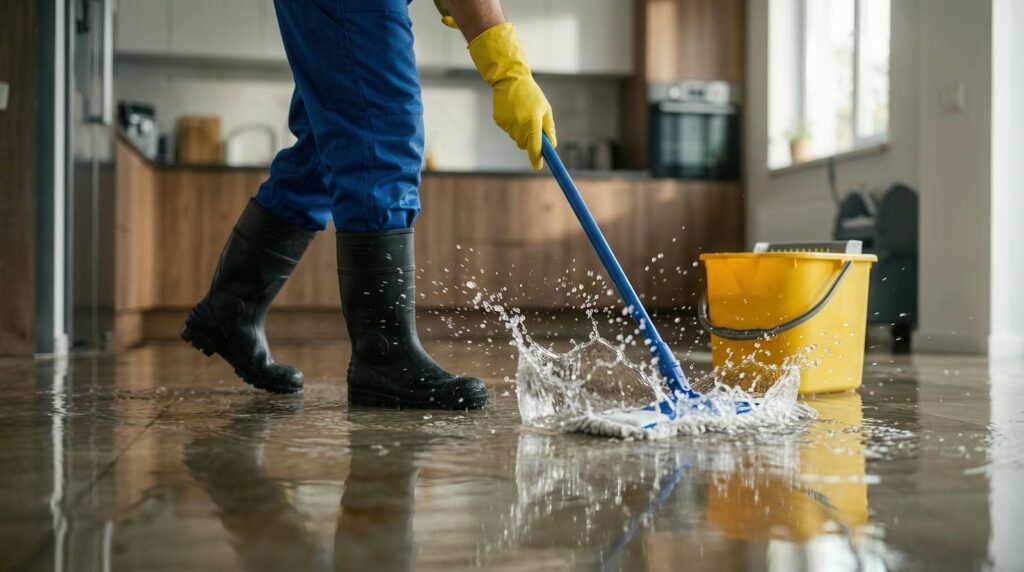
After water damage, you need to move fast: stop the leak, remove standing water, and get the affected area open to airflow. Then you’ll need to place air movers and dehumidifiers so moisture can leave the structure instead of hiding in it. But equipment alone won’t tell you when the job’s done, so you’ll want to track moisture closely and watch for the spots that stay damp longer than they should.
Key Takeaways
- Stop the water source and remove standing water immediately to prevent further structural damage.
- Place air movers and dehumidifiers quickly to promote balanced airflow and accelerate drying.
- Monitor moisture levels daily with a meter, including walls, subfloors, and framing.
- Check for hidden moisture signs like cool spots, swollen trim, and lingering odors.
- Document final moisture readings to confirm the structure is fully dried.
Stop the Leak and Remove Standing Water
First, shut off the source of water and fix the leak so the damage doesn’t continue. You should inspect pipes, fittings, appliances, and nearby walls for active seepage, then use leak detection to confirm the entry point. If you can’t isolate it quickly, call a qualified technician and stay clear of wet electrical areas.
Next, start water removal right away with a wet vacuum, mop, or pump, depending on the depth. Pull up rugs, move salvageable items, and protect contents from further exposure. Check subfloors, baseboards, and low spots for hidden pooling.
The faster you clear standing water, the less moisture stays in the structure. You’re not handling this alone; each quick step helps your space recover and keeps the process under control.
Set Up Drying Equipment
Position air movers and dehumidifiers as soon as the bulk of the water is out to speed evaporation and keep moisture from settling into walls, floors, and framing.
You’ll use proven drying techniques when you create balanced airflow and remove humid air efficiently. Keep equipment placement smart and consistent so your team works as one.
- Aim air movers across wet surfaces, not straight at corners.
- Place dehumidifiers in the driest access points for steady intake.
- Leave clear paths so air can circulate through the structure.
Check that cords stay safe, vents stay open, and units run continuously.
When you set the layout correctly, you help everyone on site move faster, stay organized, and support a cleaner dry-out.
Check Moisture Levels Until Everything Is Dry
Keep checking moisture readings with a meter until materials reach acceptable dry standards. You need to verify each wall cavity, subfloor, and framing member, because surface dryness doesn’t ensure hidden moisture is gone.
Use moisture sensors to compare affected areas with unaffected reference points, and log the numbers every day. If readings stall, adjust airflow, dehumidification, or heat, and refine your drying techniques instead of assuming progress.
Watch for cool spots, swollen trim, and lingering odors, since they often signal trapped water. Stay consistent until all materials match target levels or the manufacturer’s criteria.
When you document the final pass, you protect the structure, support the team, and know the drying job truly belongs to a completed, healthy space.
Frequently Asked Questions
How Soon Should Insurance Be Notified After Water Damage?
You should notify your insurer immediately, ideally within 24 hours, because the water damage timeline affects coverage and drying decisions. Quick reporting helps you start the insurance claim process, document losses, and protect your claim.
Can Structural Drying Prevent Mold Growth Completely?
No, you can’t prevent mold completely, but you can make it unlikely. Like a 24-hour leak I handled, fast drying techniques cut risk sharply; your mold prevention plan depends on speed, airflow, and moisture control.
What Types of Materials Need Professional Restoration?
You’ll need professional restoration for porous drywall, insulation, carpet, subflooring, and ceiling tiles. Skilled drying techniques protect restoration materials, remove hidden moisture, and help you restore safely with confidence, together.
How Do You Know if Hidden Damage Exists?
You’ll spot hidden damage by noticing warped surfaces, musty odors, and staining, but moisture detection is the real detective here. Inspect for hidden leaks, and you’ll feel like you’re finally in the know.
When Should Damaged Flooring Be Replaced Instead of Dried?
You should replace damaged flooring when a flooring assessment shows swelling, warping, delamination, mold, or structural failure, and drying won’t restore performance. Use replacement criteria with your team so you’re protected and confident together.
Conclusion
Once you stop the leak and remove standing water, you can focus on controlled drying. Set up air movers and dehumidifiers to keep air moving and pull moisture from materials. Monitor moisture levels daily; even small hidden pockets can delay recovery. In fact, many water-damage losses worsen when drying starts late or unevenly. Keep checking for cool spots and odors, and don’t wrap up until readings show the structure’s fully dry.