
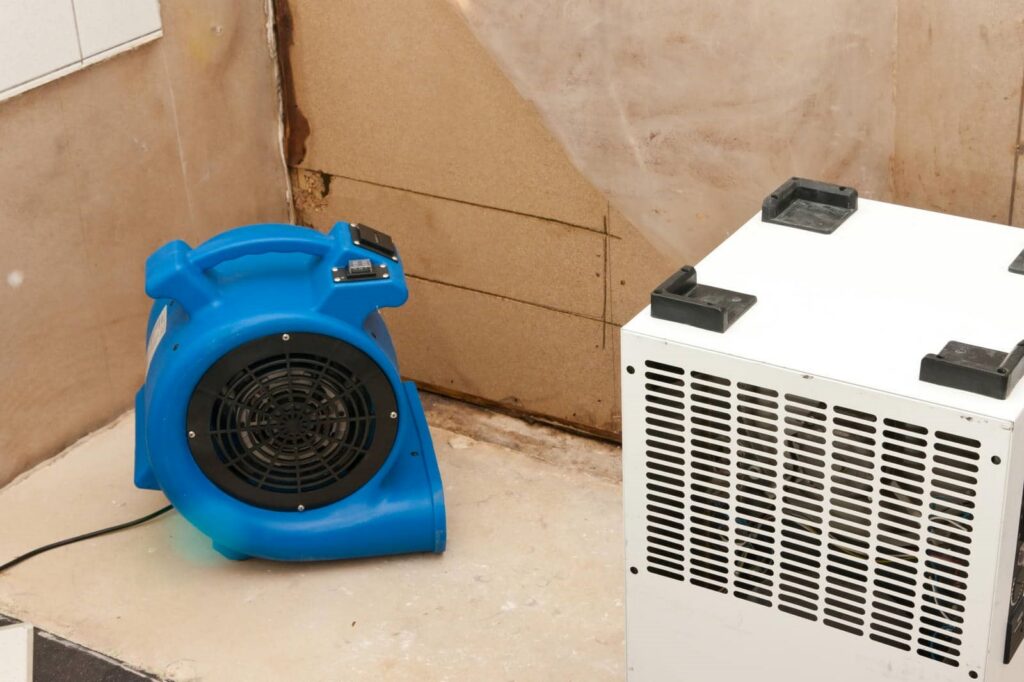
When water damage hits your home, you need to act fast to limit structural damage and secondary mold growth. You’ll want to stop the source, remove standing water, boost airflow, and bring in dehumidifiers right away. But drying visible surfaces isn’t enough; hidden moisture can stay trapped in walls and floors. The next steps determine whether the structure truly dries out or keeps deteriorating.
Key Takeaways
- Shut off the water source immediately and disconnect affected appliances to stop further damage.
- Remove standing water fast with wet vacuums and check nearby rooms for hidden seepage.
- Increase airflow by opening windows, using fans, and keeping interior doors open.
- Use dehumidifiers in the wettest area and keep doors closed to speed moisture removal.
- Inspect with moisture meters and thermal imaging to find hidden moisture before repairs begin.
Stop the Water and Protect the Structure
Before you dry anything, stop the source of water and protect the structure from further damage. Shut off the supply valve, disconnect affected appliances, and call a qualified plumber if the leak isn’t obvious.
If rain or runoff is involved, use tarps, sandbags, or temporary barriers to keep new water out. Move valuables, electronics, and loose materials away from wet areas, and document water damage for your records.
Check ceilings, walls, floors, and framing for sagging, cracks, or soft spots that can affect structural integrity. If you see electrical hazards, leave the area and get help.
You’re not alone in this step; smart action now keeps the problem contained and makes the rest of the drying process safer, faster, and more effective for your home.
Remove Standing Water Fast
Once you’ve stopped the water source, remove any standing water right away to limit absorption into flooring and framing.
Use wet vacuums to extract pooled water from hard surfaces, corners, and low spots as quickly as possible.
The faster you clear it, the less structural damage and secondary moisture buildup you’ll face.
Stop Water Source
Cut the water source first, then remove standing water as fast as you can to keep moisture from spreading deeper into walls, floors, and framing. You’ll protect the structure best when you shut off the supply valve, unplug nearby appliances if it’s safe, and confirm the leak won’t restart.
If you’re dealing with a supply line, roof intrusion, or overflow, isolate the water source immediately. That quick response supports damage prevention and gives your drying team a cleaner starting point.
Check adjacent rooms, trim, and baseboards for fresh seepage so you can act before hidden wet areas grow. When everyone on site moves with the same plan, you’ll limit spread, reduce repair scope, and keep the home ready for faster drying.
Use Wet Vacuums
Use a wet vacuum to pull standing water off floors, carpets, and hard surfaces as soon as possible. You’ll reduce saturation, limit wicking into baseboards, and speed up structural drying.
Move methodically in overlapping passes, empty the tank before it fills, and switch tools for edges and tight corners. These wet vacuum benefits help you protect subfloors, padding, and drywall from deeper damage.
Wear gloves and boots, and keep power cords clear of water. After each use, follow vacuum maintenance steps: rinse the tank, check hoses for clogs, clean filters if your model uses them, and let all parts dry completely.
When you act fast and work as a team, you give the space its best chance to recover cleanly.
Increase Airflow for Faster Drying
Open windows strategically to create cross-ventilation and move moist air out of the structure.
Position fans to push damp air toward exits and across wet surfaces, not just into open space.
You’ll dry materials faster when you keep air moving continuously through the affected area.
Open Windows Strategically
A few well-timed window openings can speed structural drying by pulling humid indoor air out and replacing it with drier outdoor air. Open windows on opposite sides of the home when outdoor conditions are cooler and less humid than inside.
Match openings to window placement so you create a clear path for air circulation through wet rooms, hallways, and stairwells. Keep interior doors ajar to let that movement reach trapped spaces, but close windows in areas where outside moisture is higher.
Check weather, dew point, and rain risk before you vent. If you’re drying with a team, coordinate openings so everyone works from the same plan. That way, you help the home breathe, support the crew, and move moisture out faster.
Use Fans Effectively
Position fans to push air across wet surfaces and through stagnant pockets so moisture evaporates faster. You’ll get better results when you match fan placement to the room layout and keep airflow direction moving from dry areas toward damp materials.
Aim a box fan low across floors, and use axial fans to sweep walls, baseboards, and cavities. Don’t blast one spot; you want broad circulation that keeps air changing.
If you’re drying after a leak, close off unused rooms so your team effort focuses on the wet zone. Recheck surfaces every few hours, then adjust fan angles as materials dry.
Pair fans with dehumidifiers, and you’ll help the whole space recover faster, safer, and with less hidden moisture.
Use Dehumidifiers to Remove Moisture
Dehumidifiers can speed up structural drying by pulling excess moisture from the air and lowering indoor humidity to a level where materials dry more efficiently.
You’ll get better moisture control when you place the unit in the wettest area and keep doors closed so the dry zone stays contained.
Check dehumidifier settings often; aim for a moderate humidity target that supports drying without overcooling the space.
Empty or drain the reservoir before it slows performance, and verify airflow isn’t blocked at the intake or exhaust.
In your crew, keep everyone aligned on runtime, target readings, and repositioning as conditions change.
When you monitor humidity consistently, you make the whole drying process more predictable and help the home recover faster.
Remove Wet Materials to Speed Drying
Pull out soaked materials as soon as you can to speed structural drying and limit secondary damage. Remove wet carpet, pads, baseboards, insulation, and furniture that won’t dry quickly.
Sort wet material types by porosity: porous items usually hold water longer than hard surfaces. Bag debris right away, and keep salvageable items in a dry staging area with airflow.
Lift materials off the floor so you can improve circulation and support drying techniques like air movement and dehumidification. Don’t stack damp items together, because trapped moisture slows the process.
Work with your team to document what you remove, then reset the space for efficient drying. The faster you clear waterlogged materials, the sooner your home feels controlled, stable, and ready for the next step.
Check for Hidden Moisture in Walls and Floors
After you remove the obvious wet materials, you still need to check the parts you can’t see, because moisture often stays trapped inside walls and beneath flooring.
Use moisture meters for fast moisture detection during wall inspection and floor analysis. Map readings in a grid so you can spot hidden leaks and areas that dry unevenly.
Thermal imaging helps you find cooler pockets that may hold water behind drywall or under subflooring. Compare those spots with nearby humidity levels to judge how much drying remains.
Do a careful dampness assessment around baseboards, seams, and corners, since those edges often stay saturated longest.
You’ll make better decisions when you trust the numbers, not just the surface feel, and your home-drying team can stay coordinated.
When to Call a Water Damage Restoration Pro
Call a water damage restoration pro when moisture has spread beyond a small, contained area, when drywall, insulation, or subflooring stays wet, or when you suspect contaminated water, mold growth, or structural damage.
You’ll get a faster damage assessment and a realistic restoration timeline, which helps you protect your home and your crew. A pro uses meters, air movers, and dehumidifiers to dry hidden cavities, reduce mold risk, and document conditions for insurance claims.
If you’re building your emergency plan, add contractor selection criteria now: 24/7 response, clear pricing, and proven local references.
You don’t have to guess alone; the right team helps you act with confidence, keep drying on track, and stay connected to a trusted path back to normal.
Frequently Asked Questions
How Long Does Structural Drying Usually Take?
You’re usually looking at 3–5 days of drying time, though moisture retention, material type, and saturation can extend it. You’ll need monitoring, airflow, and dehumidification to keep your structure on track.
What Tools Detect Moisture Behind Walls?
You’ll use moisture meters and thermal imaging to detect dampness behind walls. Pin-type meters probe materials directly, while infrared cameras reveal cool, wet areas. Together, they help you find hidden moisture fast and act confidently.
Can Wet Insulation Be Saved After Flooding?
Usually, you can’t save wet insulation after flooding. If your basement soaked through, you’d replace it quickly. You’ll protect your home, reduce mold risk, and support flood prevention by choosing insulation replacement after drying inspections.
How Do I Dry Hardwood Floors Safely?
You’ll dry hardwood floors safely by removing standing water, increasing airflow, and using dehumidifiers. Use gentle drying techniques, check for cupping, and follow hardwood maintenance steps. Act quickly, but don’t overheat or sand too soon.
Should I Document Water Damage for Insurance?
Yes—you should document water damage for insurance, like mapping a storm’s path. You’ll strengthen your insurance claim process with water damage documentation: photos, dates, moisture readings, receipts, and repair notes. Keep records organized, clear, and shareable.
Recap
If you act fast, you can limit damage and cut drying time. Stop the source, extract standing water, move air across wet areas, and run dehumidifiers until humidity drops. Remove soaked materials and check hidden moisture in walls and floors. For example, if a burst pipe soaks your basement overnight, same-day response can save drywall, flooring, and framing. If moisture lingers, call a water damage restoration pro before mold and rot spread.