
Environmental Consultants in Sterling Heights
Environmental consultants in Sterling Heights, MI. Insurance billing accepted. Call (586) 580-0197.
Our technicians are dispatched from our Macomb, MI headquarters and are typically on-site in Sterling Heights within 60 minutes of your call.
When a Sterling Heights basement floods or a ceiling stain shows up after a winter thaw, the water itself is only half the problem. What’s growing in the wall cavity, what’s in the dust disturbed by demolition, and whether the air is safe to breathe again are questions that need documentation, not guesswork. Environmental consulting work in Sterling Heights carries its own wrinkles: Macomb County’s clay-heavy soil, the deep basements that Michigan’s frost line requires almost every home to have, and a housing stock built heavily in the 1950s through 1970s that may still carry asbestos-containing materials or lead-based paint under later renovations.
Why Sterling Heights Homes Need a Closer Look
Most houses in this part of Macomb County sit on full basements rather than slab foundations, a direct result of Michigan’s frost depth requirements. That’s useful for storage and finished living space, but it also means groundwater intrusion, sump pump failures, and seasonal humidity swings all end up affecting a below-grade space that’s harder to inspect than a crawlspace. Add in decades of freeze-thaw cycles that stress foundation walls and tile joints, and you get a pattern we see often here: moisture finding its way in slowly, over months, before anyone notices a musty smell or a discolored baseboard. Because so much of Sterling Heights was built out during the postwar boom, older mechanical rooms, popcorn ceilings, and vinyl floor tile from that era can still contain asbestos, and pre-1978 paint layers may contain lead even where the home has been updated since. That combination is exactly why testing before demolition or remediation matters, rather than assuming a material is safe because it looks fine.
Our Environmental Consulting Process in Sterling Heights
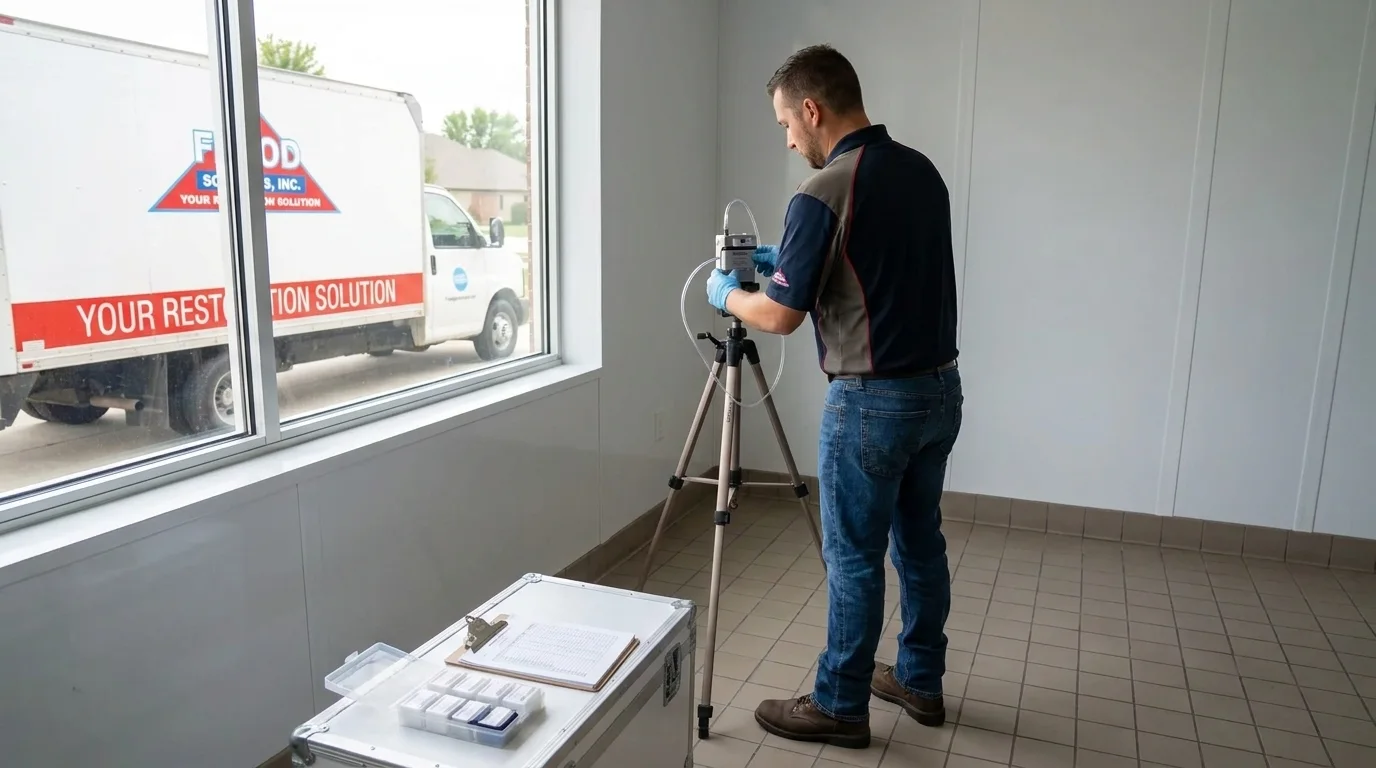
The first visit is about sampling, not guessing. We collect air samples, swab or bulk-sample suspect materials, and take moisture readings in framing and subflooring using a calibrated meter rather than a visual check. Samples go to an independent, accredited lab, so results aren’t self-reported. Depending on what the property needs, that might mean a mold air quality assessment before or after remediation, an asbestos survey ahead of a kitchen or bathroom demo, or a moisture map that documents how far water traveled behind drywall and under flooring. We write the findings into a report formatted for insurance adjusters, real estate transactions, or a homeowner who just wants a straight answer before deciding whether to renovate or remediate. If remediation follows, we can coordinate post-work clearance testing so there’s a documented, third-party-verified result rather than just a contractor’s word that the space is clean.
Insurance and Documentation Coordination
Macomb County adjusters see a steady volume of basement water claims every spring as snowmelt and heavy rain push groundwater against foundation walls, so having independent lab documentation tends to move a claim along faster than photos alone. We provide the lab reports, moisture logs, and sampling location diagrams adjusters ask for, and we’re glad to walk a homeowner through what the report actually means before it goes into a claim file. For HOA-managed condos and townhome communities common on the newer end of Sterling Heights’ housing stock, we can also format reports to match what a management company’s insurance carrier or board typically requests, so the paperwork doesn’t bounce back for missing detail.
Local note
One pattern worth knowing: basements in Sterling Heights that back up to older sanitary or storm sewer lines are more prone to slow seepage during the heavy spring rain events Macomb County sees most years, and that seepage often goes unnoticed until a finished basement wall or carpet pad already shows mold growth. Because that growth can establish within 24 to 48 hours of sustained dampness, we recommend testing sooner rather than waiting to see if a musty smell clears on its own, especially in finished lower levels where the moisture source isn’t visible behind drywall.
If you’re staring at a discolored ceiling tile, planning a renovation in a home built before 1980, or just need a documented answer before a real estate closing, Flood Solutions inc has been doing this kind of assessment work out of Macomb since 1996. Call (586) 580-0197 to schedule an environmental consultation for your Sterling Heights property and get lab-backed answers instead of guesses.
Serving Sterling Heights from our Macomb headquarters — ★ 4.4 · 35 Google reviews
“I have utilized Flood and Fire solutions twice for my home. I would highly recommend them and will always use them for any needs in the future if I unfortunately have the need. Crew worked very hard, efficiently, and professionally. Luis and his crew were very impressive and take pride in what they…” — Angela, February 2026Read our reviews on Google →
Environmental Consultants in Sterling Heights: Service Coverage
Frequently Asked Questions
How fast can you arrive for environmental consultants in Sterling Heights?
Do Sterling Heights basements need different testing than a home with a crawlspace?
Should older Sterling Heights homes be tested for asbestos before a renovation?
How does Macomb County's spring rain pattern affect environmental testing timing?
Will an environmental report help with an HOA or condo association insurance claim in Sterling Heights?
What's included in a post-remediation clearance test?
Environmental Consultants response in Sterling Heights
Most Sterling Heights calls see a technician on-site within 60 minutes from our Macomb headquarters.