
TL;DR: Ice dam water damage repair in Macomb, MI typically costs between $1,500 and $12,000. Steam-based ice removal alone usually runs $500 to $1,500. Add water extraction, wet insulation replacement, ceiling repair, and any roof repair, and a leak that ran for several days in a two-story home with a steep roof pitch can land at the high end. The exact number depends mostly on how long the water was getting in before anyone noticed.
If you just pulled down a water-stained section of drywall in a second-floor bedroom, or you’re staring at a brown ring spreading across the ceiling after a January thaw, you’re trying to figure out whether this is a $600 fix or a $6,000 one. Macomb’s housing stock, mostly two-story colonials and ranches built from the 1970s through the 2000s, has roof pitches and attic insulation levels that make ice dams a recurring winter problem. The honest answer is that the cost depends on how long the water sat before you called someone, not just on the size of the ice dam itself.
How Much Does Ice Dam Water Damage Repair Cost in Macomb?
Most Macomb homeowners pay between $1,500 and $12,000 total to resolve ice dam water damage, combining ice removal, drying, insulation replacement, and ceiling repair. A small leak caught early can cost under $2,000. A multi-room leak in a two-story home with saturated attic insulation can push past $8,000.
The total bill is really four separate line items that homeowners tend to lump together. Here’s how they typically break down:
| Scenario | Typical Cost Range |
|---|---|
| Steam-based ice dam removal only (no interior leak yet) | $500 - $1,500 |
| Small ceiling stain, minor insulation wet spot, single drywall patch | $1,500 - $3,500 |
| One room with saturated insulation and drywall section replaced | $3,000 - $5,500 |
| Multi-room ceiling leak, extensive wet insulation, drywall and paint matching | $5,500 - $9,000 |
| Two-story home, steep pitch, extended leak, large attic area affected | $8,000 - $12,000+ |
| Roof repair added (ice and water shield, shingle replacement, flashing) | $500 - $3,000 additional |
An ice dam removal service like the one offered through /services/ice-dams/ handles the roof-level problem. The interior water damage, drying, insulation, and ceiling repair is a separate scope, which is why homeowners are often surprised when the bill has two distinct parts.
What Actually Drives the Cost Up or Down?
The single biggest cost factor is how long the water was leaking before it was addressed, not the size of the ice dam. A dam that backs up water for one cold snap and gets caught fast costs far less than one that’s been quietly soaking an attic for two weeks.
A few other factors move the number:
- Attic access. A walk-up attic with standard clearance is cheaper to work in than a cramped knee-wall attic or a cathedral ceiling with no access at all, which sometimes requires cutting into drywall from below.
- Roof pitch and story count. A steep two-story roof needs more setup time and safety equipment for steam removal than a single-story ranch with a shallow pitch.
- Volume of wet insulation. Blown-in cellulose holds water and loses R-value once saturated, almost always requiring full replacement rather than drying in place. Batt insulation sometimes dries, but it’s rarely worth the labor to try.
- Number of rooms and finish level. A single stained ceiling tile is a different job than water that tracked along a top plate and showed up in three bedrooms. Textured ceilings and color-matched paint add labor the base drywall price doesn’t include.
- How fast drying started. Mold can begin growing on wet materials within 24 to 48 hours, according to the EPA. A delay of even a few days can turn a drying job into a materials-removal job.
Does Homeowners Insurance Cover Ice Dam Damage?
Most homeowners policies cover the sudden interior water damage from an ice dam, meaning the stained ceiling, wet drywall, and soaked insulation, as a sudden and accidental loss. The ice dam removal itself and the underlying cause, usually inadequate attic insulation or ventilation, are often treated differently and may not be covered at all.
This is a nuance that trips up a lot of Macomb homeowners. The water that gets inside your home is frequently Category 1, meaning relatively clean, under the ANSI/IICRC S500 standard for water damage restoration, since it starts as melted snow. But clean water doesn’t stay clean if it sits in insulation for days, and the category can shift. Insurers generally distinguish between the resulting interior damage (often covered) and the cost of removing ice from the roof or fixing a ventilation problem that let heat escape into the attic (often excluded as maintenance). Policy language varies by insurer, so check your specific policy or ask your agent directly before assuming either way. Our guide to what homeowners insurance covers for water damage walks through how adjusters typically draw that line.
What Does the Repair Process Actually Involve?
A proper ice dam water damage repair follows a set sequence, starting with stopping further water intrusion and ending with the ceiling repair. Skipping steps, especially the drying step, is how a $2,000 job becomes a mold problem.
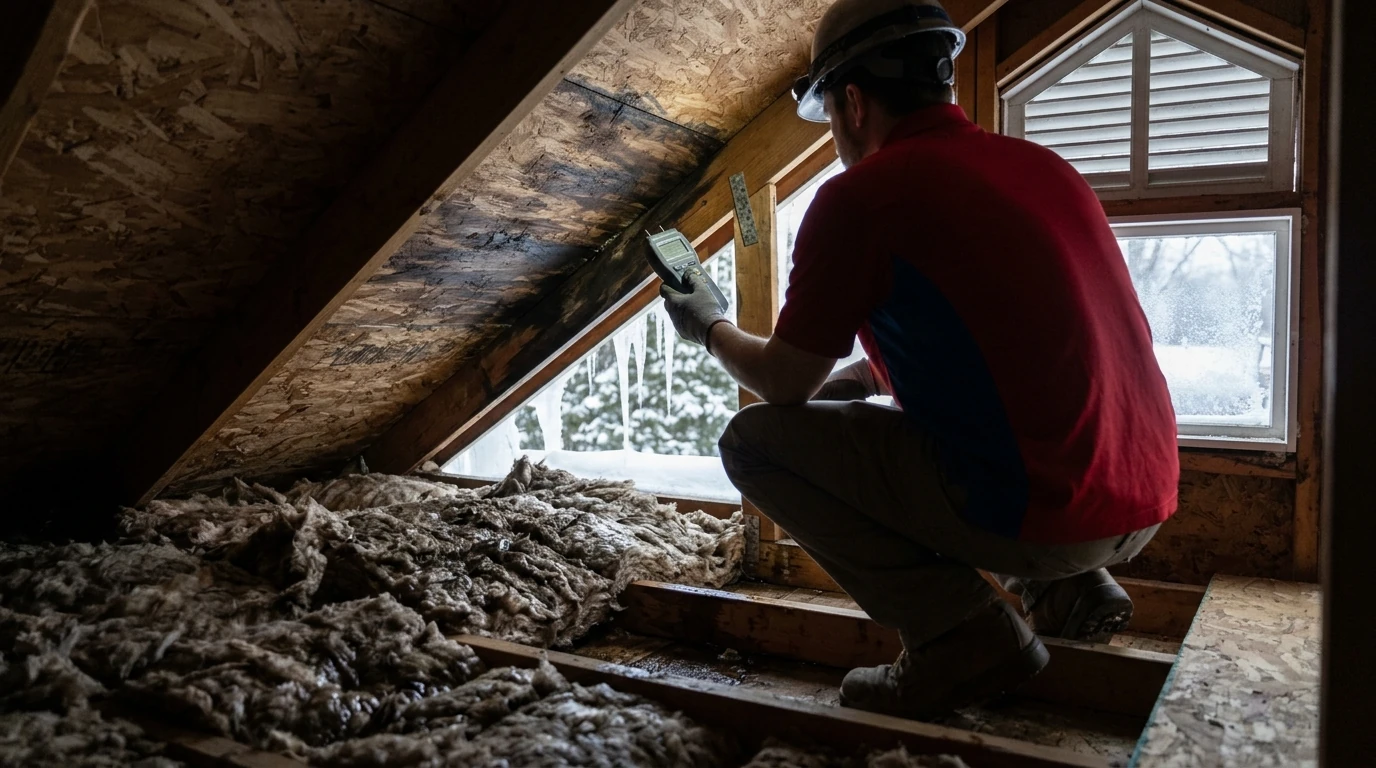
- Inspection and moisture mapping. A technician checks the attic, ceiling, and wall cavities with a moisture meter to find the full extent of the wet area, which is almost always larger than the visible stain.
- Ice dam removal from the roof. Low-pressure steam equipment melts the ice without damaging shingles, stopping new water from entering.
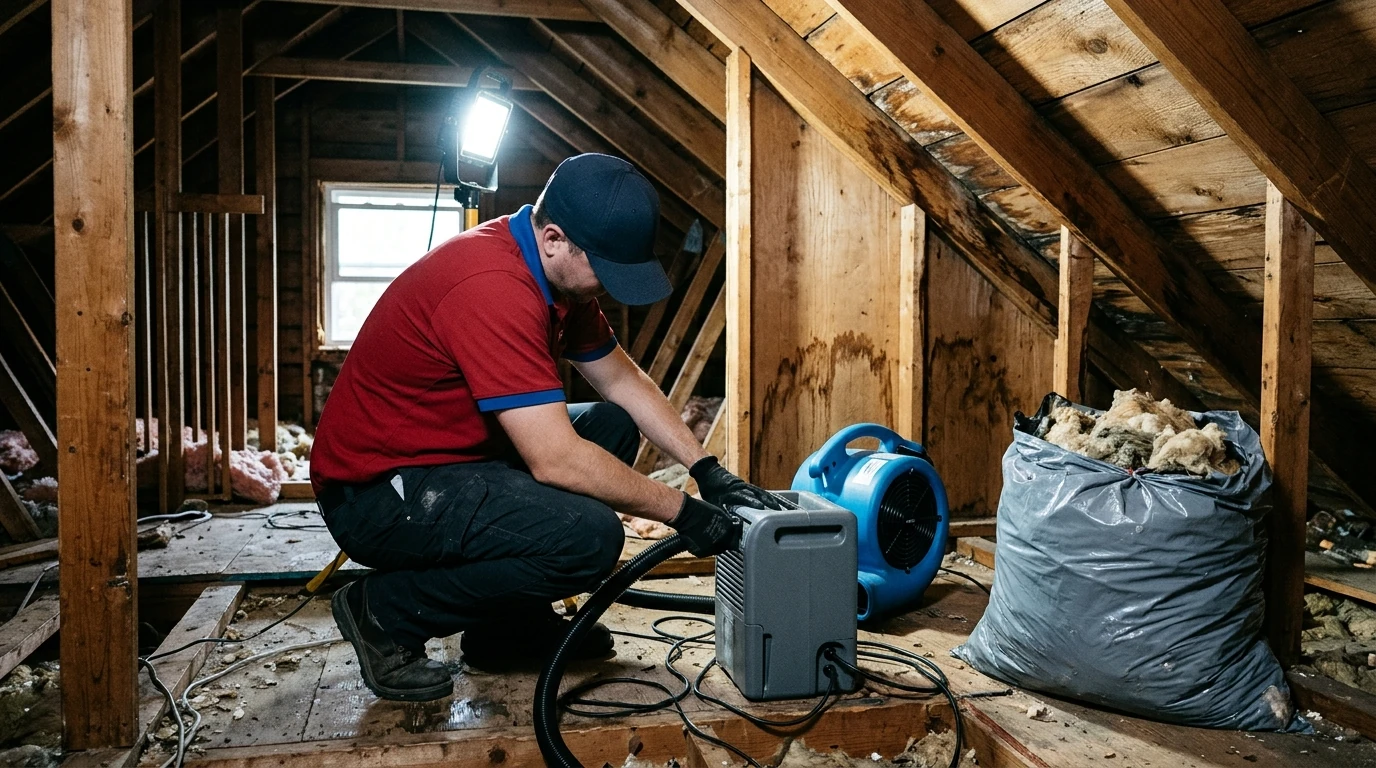
- Water extraction and structural drying. Air movers and dehumidifiers dry the attic deck, framing, and any affected drywall, following the drying principles in the ANSI/IICRC S500 standard.
- Removal of saturated insulation. Wet cellulose or fiberglass insulation gets removed and bagged rather than dried, since it rarely returns to full performance once soaked.
- Drywall and ceiling repair. Damaged drywall sections are cut out, replaced, taped, textured, and painted to match. Our ceiling water damage repair page covers this stage in more detail.
- Insulation replacement and roof repair. New insulation goes back in, and any damaged shingles, underlayment, or ice-and-water shield get addressed separately with a roofer.
The first two steps, extraction and structural drying, fall under general water damage restoration and emergency water removal work, which is why getting someone on-site quickly matters more than which company eventually does the drywall.
If water is actively dripping right now, the priority is containing it and getting drying equipment running, not waiting for a full estimate first. Flood and Fire Solutions offers a free consultation to document the damage for your insurance claim before drying work starts, which helps keep the paper trail straight for the adjuster. You can also call the team at (586) 580-0197 for a same-call assessment.
About the Author
Craig Geatches has spent years documenting winter water damage repairs across Macomb County, working alongside experienced technicians to track what actually drives a repair bill from the first inspection to the final ceiling patch. Flood and Fire Solutions has served Macomb and the surrounding area since 1996 and provided the technical review for this guide.
Need help now? Call Flood and Fire Solutions at (586) 580-0197.