
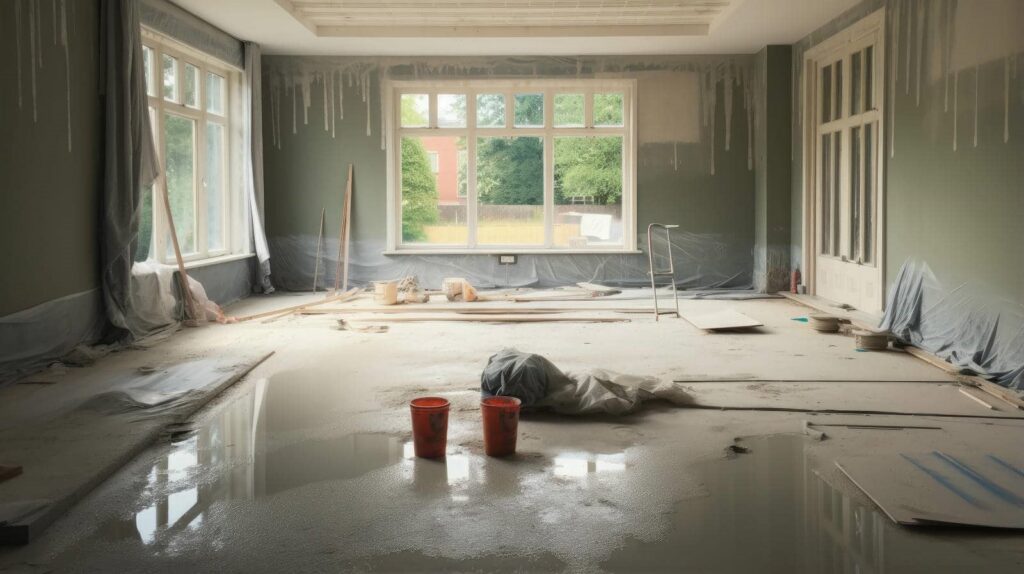
After a storm, you need to act fast to limit damage and prevent mold from taking hold. You’ll first stop the water source and secure the area, then remove standing water and wet debris before it spreads further. Once the space is clear, you’ll dry the structure, clean contaminated surfaces, and assess what materials must be repaired or replaced. The key details that determine whether the job succeeds come next.
Key Takeaways
- Shut off water and electricity, then identify the leak source and make the area safe before cleanup.
- Remove standing water quickly with pumps or wet vacs, starting at the lowest point and moving toward exits.
- Dry the structure immediately with fans and dehumidifiers to prevent mold and hidden moisture damage.
- Clean and disinfect all flooded surfaces, and discard soaked items that hold contaminants or odors.
- Replace damaged drywall, insulation, trim, and warped flooring only after framing and subfloors are fully dry.
Stop the Water and Secure the Area
First, shut off the water at the main valve or the nearest supply line, then cut power to the affected area if there’s any chance water has reached outlets, appliances, or wiring.
Next, identify the water source so you can stop further intrusion, whether it’s a burst pipe, roof leak, or backed-up drain.
Check walls, ceilings, and floors for active flow, but don’t enter unstable spaces alone.
Put on gloves and boots, and keep family members and pets away from the area.
Use caution tape, close doors, and open exterior access only if it improves safety measures.
If you smell gas, hear hissing, or see structural movement, leave immediately and call emergency services.
Your crew can’t begin recovery until you’ve controlled the source and secured the space.
Remove Flood Water and Wet Debris
Once the area is safe, remove standing water as quickly as possible using a pump, wet/dry vacuum, or sump equipment sized for the job.
Start water extraction at the lowest point and work toward exits so you don’t trap runoff. Move methodically through each room, checking under cabinets and around baseboards where water hides.
Bag saturated items, broken drywall, insulation, and ruined contents for debris disposal, and separate sharp or contaminated materials from salvageable pieces.
Use sturdy gloves, boots, and eye protection so you can work with confidence and stay aligned with your crew.
Load waste into lined containers or tarps, then move it out through a clear path. Keep hoses, cords, and tools organized to reduce trip hazards and keep the cleanup efficient for everyone.
Dry Flood Damage Before Mold Starts
After the standing water is gone, dry the structure immediately to limit mold growth and secondary damage. You should open windows if weather permits, run fans, and place dehumidifiers in the wettest rooms.
Remove baseboards, insulation, and soaked drywall where moisture remains trapped. Aim airflow across surfaces, not just into the center of the room. Use drying techniques that target walls, subfloors, and cavities, and monitor humidity until it drops below 50 percent.
Check hidden areas with a moisture meter so you catch damp pockets early. For mold prevention, keep materials separated and elevated to improve air circulation.
Work methodically, document progress, and stay patient; your home can recover faster when you and your crew dry every affected layer completely.
Clean and Deodorize Flooded Rooms
With the structure dry, clean every flooded surface to remove silt, sewage, and residue before odors set in. You’ll protect your space and support mold prevention by scrubbing hard surfaces with detergent and hot water, then rinsing well.
Disinfect counters, fixtures, and washable furniture with a bleach solution or EPA-registered cleaner, following label directions. Use separate cloths for contaminated areas, and change rinse water often so you don’t spread grime.
For odor removal, run fans, open windows if weather allows, and place dehumidifiers to keep humidity low. Remove soaked rugs, cushions, and porous items that hold contaminants.
If a smell lingers, repeat cleaning and check hidden corners, because trapped debris can keep the room from feeling safe, fresh, and fully yours.
Repair Flood-Damaged Walls and Floors
Cut out and replace flood-damaged wallboard, insulation, baseboards, and trim that stayed wet long enough to swell, crumble, or support mold growth.
You’ll expose framing, then clean, dry, and inspect every stud, plate, and fastener for rot or corrosion. Treat sound wood with an approved disinfectant, then let surfaces reach proper moisture levels before you close the wall.
For wall restoration, install new insulation, hang new drywall, tape, mud, sand, and prime with mold-resistant products.
On floors, remove warped underlayment and any finish that can’t be salvaged. If subflooring is soft, delaminated, or contaminated, complete floor replacement instead of patching.
Reinstall flooring only after the structure is dry, level, and secure. You and your crew can restore a safe, durable room together.
Frequently Asked Questions
Do I Need to Document Storm Damage for Insurance Claims?
Yes, you do. You’ll need insurance documentation, including photos, dates, repair estimates, and receipts, to support your storm damage claim. Keep records organized so you can prove losses and strengthen your settlement.
When Should I Call a Professional Water Damage Restoration Company?
Call a pro within 24 hours if water’s still present; 48% of losses worsen fast. You’ll need water extraction and mold prevention when wet drywall, odors, or electrical risks appear, protecting your home and community.
How Can I Tell if Electrical Systems Are Unsafe After Flooding?
You can’t tell safely without an electrical inspection; if outlets, breakers, or fixtures were flooded, assume danger. Turn off power, use safety measures, and call a licensed electrician so you’re protected and included in recovery.
Can Contaminated Floodwater Affect My Home’s HVAC System?
Yes—contaminated floodwater can damage your home’s HVAC system. If a basement unit inhales sewer-tainted water, you’ll need HVAC maintenance quickly; floodwater contaminants can corrode coils, clog ducts, and spread unhealthy particles through your shared indoor air.
What Permits Are Required for Major Flood Repair Work?
You’ll usually need building, electrical, plumbing, and sometimes demolition permits for major flood repair; local regulations, vary by city, so you should contact your building department first and document all work for inspections.
Wrap-Up
By stopping the water source, removing standing water, and drying the structure fast, you reduce long-term damage and mold risk. For example, if a basement takes on 2 inches of storm water, you should pump it out, run dehumidifiers, and replace soaked drywall before rebuilding. Then clean, disinfect, and verify moisture levels are safe. If you act quickly and methodically, you’ll restore the space more effectively and avoid costly repairs later.