
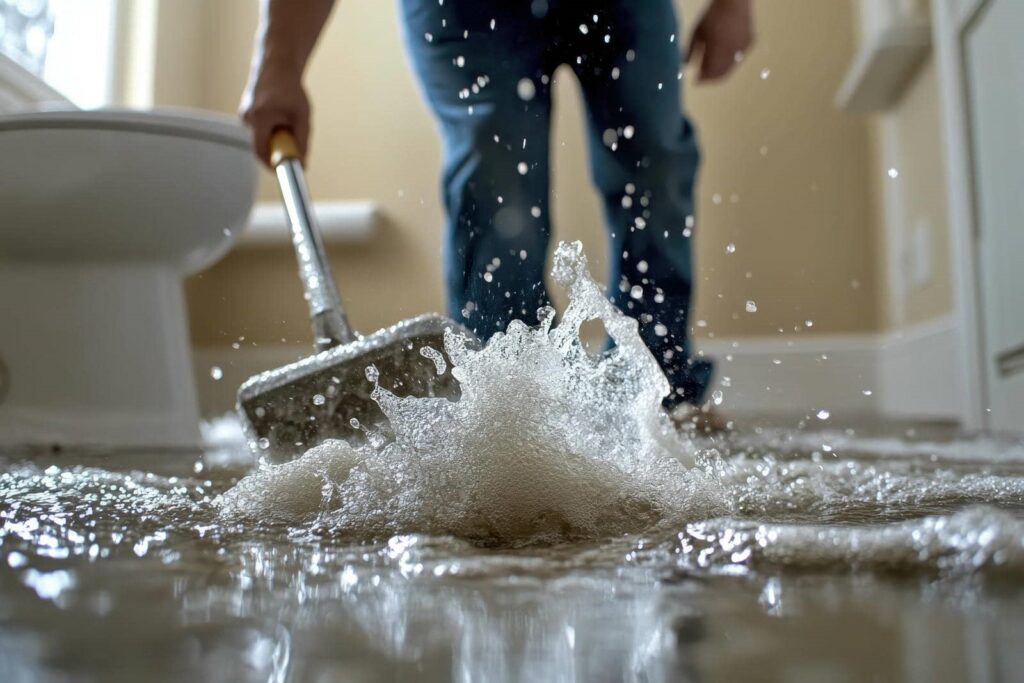
Many homeowners underestimate how quickly home water damage can escalate, often resulting in costly repairs. Regular plumbing inspections can help you catch leaks before they become serious issues. Additionally, ensuring your property has proper drainage is essential for protecting your foundation. But that’s not all; monitoring indoor humidity can also play a significant role in preventing mold growth. Discovering these practical strategies can save you time and money in the long run.
Key Takeaways
- Regularly inspect plumbing for leaks and fix issues promptly to prevent water damage.
- Ensure proper drainage around your home by keeping gutters clean and landscaping graded away from the foundation.
- Monitor indoor humidity levels and use a dehumidifier to prevent mold and structural damage.
- Conduct routine maintenance on appliances to catch leaks early and avoid costly repairs.
- Educate your household on water damage prevention practices to promote awareness and action.
Regularly Inspect and Maintain Plumbing Systems
To prevent water damage in your home, it’s essential to regularly inspect and maintain your plumbing systems.
Start by checking for leaky faucets, as even a small drip can waste gallons of water over time and lead to costly repairs. Tighten any loose fittings or consider replacing worn washers to stop the leaks.
Next, examine your pipes for signs of corrosion or wear. If you live in an area with cold winters, adding pipe insulation is vital to protect against freezing and bursting. Insulating your pipes can save you money on energy bills and prevent potential water damage.
Don’t forget to inspect appliances like dishwashers and washing machines for leaks, too.
Install Proper Drainage Solutions
After confirming your plumbing systems are in good shape, it’s important to contemplate how water flows around your home.
Installing proper drainage solutions is essential for preventing water damage. Start by evaluating your landscape grading; the ground should slope away from your foundation to direct rainwater away. If your yard doesn’t have the right slope, consider regrading it to create a natural drainage path.
Next, invest in effective drainage systems, such as French drains or surface drains, to manage excess water. These systems can help channel water away from vulnerable areas, reducing the risk of flooding.
Additionally, verify gutters and downspouts are clean and properly directed away from your home.
Monitor Humidity Levels and Use Dehumidifiers
Humidity levels in your home can greatly impact your risk of water damage, so it’s crucial to monitor them regularly.
Keeping humidity in check helps prevent mold growth and structural damage. Here are some tips for effective humidity control:
- Use a hygrometer: This device helps you measure humidity levels accurately throughout your home.
- Set the right range: Aim for indoor humidity levels between 30% and 60% for ideal moisture detection.
- Invest in a dehumidifier: If you live in a humid area, a dehumidifier can help maintain optimal levels.
- Ventilate your space: Open windows or use exhaust fans in kitchens and bathrooms to promote air circulation.
Frequently Asked Questions
How Can I Identify Early Signs of Water Damage in My Home?
You can identify early signs of water damage by checking for leaky pipes and inspecting for ceiling stains. Look for discoloration, peeling paint, or mold, as these often indicate moisture issues needing immediate attention.
What Insurance Coverage Is Best for Water Damage Protection?
You’ll want a thorough homeowners policy with flood insurance included. Check policy limits to ensure they cover the full extent of potential water damage. This way, you’re protected and can feel secure in your home.
Should I Use a Sump Pump in My Basement?
Yes, you should use a sump pump in your basement. It prevents basement flooding by efficiently removing excess water, protecting your home and belongings from damage. Enjoy peace of mind knowing your space stays dry and safe.
How Often Should I Test My Home’s Water Pressure?
You shouldn’t let the water pressure slip through your fingers. Use a pressure gauge to test your home’s water pressure at least once a year, ensuring everything runs smoothly and preventing potential issues down the line.
What Should I Do Immediately After Discovering Water Damage?
Immediately start water extraction to minimize damage. Next, conduct a thorough damage assessment to identify affected areas. Document everything for insurance purposes, and consider contacting professionals to ensure proper restoration and prevent future issues.
Review
By taking these proactive steps, you’re not just protecting your home; you’re building a fortress against the relentless tide of water damage. Regular plumbing checks, effective drainage, and humidity control are your trusty shields in this battle. Remember, a stitch in time saves nine—so don’t wait for leaks to become waterfalls. Arm yourself with knowledge and tools, and keep your home safe and sound, standing tall against nature’s unpredictable whims. Your future self will thank you!