
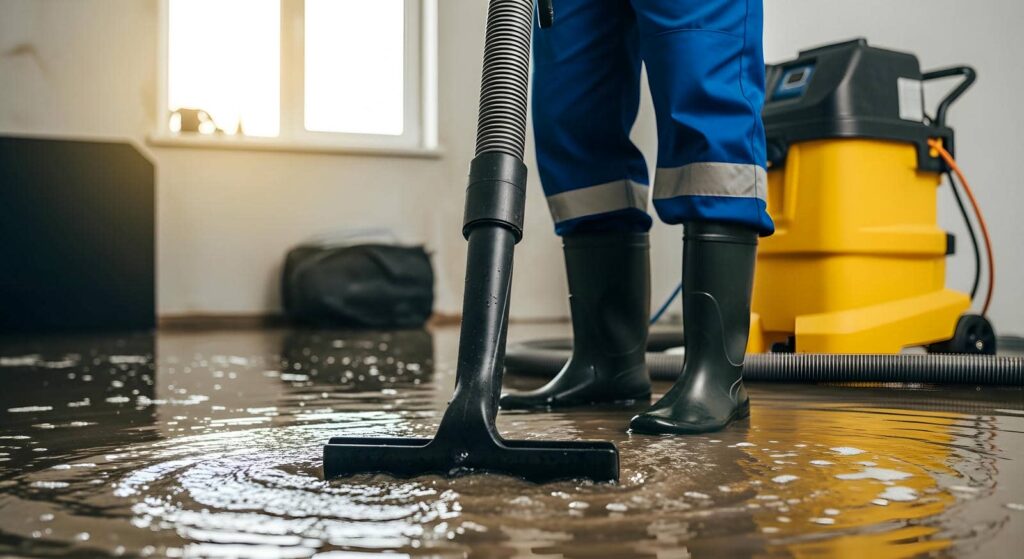
When water intrusion strikes your home, knowing how to act quickly can make all the difference. First, assess the situation and ensure safety by turning off the electricity. Then, you can use a wet/dry vacuum for efficient water extraction. For larger floods, submersible pumps become essential. But what about those immediate cleanup efforts? And when should you consider calling in emergency water removal professionals? Let’s explore these vital techniques further.
Key Takeaways
- Identify the source of water intrusion and prioritize safety by turning off electricity and wearing protective gear.
- Use a wet/dry vacuum for efficient water extraction, ensuring it has a powerful motor and a large tank capacity.
- Implement submersible pumps for large-scale removal, positioning them in the lowest area and directing water away from the foundation.
- Utilize absorbent materials like towels and microfiber cloths for immediate moisture cleanup and drying.
- Contact professional water removal services when facing substantial water accumulation or structural concerns.
Assessing the Situation and Safety Precautions
When facing water damage in your home, the first step is to assess the situation carefully. Start by identifying the source of the water intrusion, whether it’s a burst pipe, flooding, or a leak. This situation evaluation helps determine the extent of the damage and the necessary actions to take.
Next, prioritize safety measures. Turn off the electricity in affected areas to prevent electrical hazards. Wear protective gear like gloves and boots, as contaminated water can pose health risks.
If the damage is extensive, consider evacuating the premises until professionals can assess the situation.
Document the damage with photos for insurance purposes, as this can expedite claims. Remember, prompt action is vital in minimizing damage and preventing mold growth.
Using a Wet/Dry Vacuum for Efficient Water Extraction
After ensuring your safety and evaluating the damage, it’s time to tackle the water removal process. A wet/dry vacuum is an invaluable tool for efficient water extraction.
Look for key wet/dry vacuum features like a powerful motor, a large capacity tank, and multiple attachments to handle various surfaces and debris. Start by removing any obstacles from the area and setting up your vacuum, ensuring it’s plugged into a grounded outlet.
As you vacuum, move slowly to allow for maximum water extraction.
After usage, perform vacuum maintenance by emptying the tank, cleaning filters, and checking hoses for clogs. Regular maintenance keeps your vacuum in top condition, ready for future emergencies.
Remember, investing time in understanding your wet/dry vacuum enhances its effectiveness and fosters a sense of community among homeowners who share tips and experiences in water management.
Stay prepared and confident in your abilities!
Implementing Pumps for Large-Scale Water Removal
Implementing pumps for large-scale water removal can considerably enhance your ability to manage extensive flooding in your home.
Submersible pumps are particularly effective for water extraction during emergencies. Here’s how to use them effectively:
Select the Right Pump: Choose a submersible pump with adequate capacity based on the flood level in your home.
Position the Pump: Place the pump in the lowest point of the flooded area for maximum efficiency.
Connect the Hose: Attach a discharge hose to direct the extracted water away from your home’s foundation.
Monitor the Process: Keep an eye on the pump operation, ensuring it runs smoothly and doesn’t overheat.
Utilizing Absorbent Materials for Immediate Cleanup
Absorbent materials play an essential role in immediate cleanup during water emergencies. When you’re faced with excess water, using absorbent towels is vital for minimizing damage. These towels effectively soak up moisture, allowing you to quickly address the situation before it worsens.
Make sure you have a good supply on hand to tackle spills and leaks promptly. For best results, choose quick-drying absorbent materials. They enhance your cleanup efficiency and reduce the risk of mold growth, which can develop in damp conditions.
After soaking up water, wring the towels out and allow them to dry completely for reuse. In addition to absorbent towels, consider using microfiber cloths, as they provide excellent moisture absorption.
Professional Water Removal Services: When to Call for Help
How do you know when it’s time to call in professional water removal services? If you’re facing significant water damage, it’s essential to act swiftly. Restoration experts can help you mitigate further issues.
Here are some indicators that you should reach out:
Substantial Water Accumulation: If you’re dealing with several inches of standing water, it’s beyond DIY cleanup.
Persistent Moisture: When walls, ceilings, or floors remain damp after your efforts, hidden moisture can lead to mold.
Structural Concerns: If you notice sagging or warping, structural integrity may be compromised.
Contaminated Water: If the water source is from sewage or chemicals, professionals have the necessary equipment to handle hazardous materials safely.
Frequently Asked Questions
How Do I Prevent Mold Growth After Water Removal?
To prevent mold growth, ensure thorough moisture control by drying affected areas quickly. Use dehumidifiers and fans, and maintain low humidity levels. Regularly inspect for leaks and address any water issues promptly to enhance mold prevention.
What Personal Protective Equipment Should I Wear During Water Removal?
When tackling a flood in your basement, wear protective gloves and safety goggles. These items shield you from contaminants and injury, ensuring you stay safe while effectively managing the water removal process.
Can I Use My Regular Vacuum for Water Removal?
You can’t use your regular vacuum for water removal due to household vacuum limitations. Instead, utilize wet vacuuming techniques with a proper wet/dry vacuum, ensuring effective water extraction while protecting your equipment and home.
How Long Does It Take for Carpets to Dry Completely?
Carpets can take anywhere from 24 to 48 hours to dry completely, depending on various drying time factors. Employing effective carpet drying methods, like fans and dehumidifiers, can greatly speed up this process.
What Insurance Coverage Should I Have for Water Damage?
You should consider homeowners’ insurance with specific water damage coverage options. This typically includes protection against burst pipes and appliance leaks. Review your policy carefully to ensure it meets your needs and provides adequate financial security.
Conclusion
In the face of water intrusion, acting swiftly is essential to prevent further damage. By evaluating the situation, utilizing a wet/dry vacuum, and employing pumps when necessary, you can reclaim your space from the clutches of water. Absorbent materials offer immediate relief, while professional services stand ready for more severe cases. Remember, every minute counts; don’t let water turn your home into a soggy nightmare. Take control and restore your home to its former dry glory.