When your business faces flood damage restoration, knowing the best restoration methods can make a significant difference in recovery time and costs. From evaluating the extent of damage to implementing effective mold prevention strategies, each step is essential. You’ll want to activate your emergency response plan immediately and utilize industrial-grade equipment for water extraction. Understanding these techniques will help you minimize disruption and safeguard your assets. Let’s explore the key methods that can help your business bounce back effectively.
Key Takeaways
- Conduct a thorough assessment to identify water damage sources and affected areas before initiating restoration methods.
- Utilize industrial-grade water extraction equipment to efficiently remove standing water and prevent further damage.
- Implement strategic drying and dehumidification techniques to accelerate the restoration process and prevent mold growth.
- Prioritize sanitization by using effective cleaning agents and UV sterilization methods to ensure safe environments for employees and customers.
- Establish flood barriers and proper drainage systems to prevent future water intrusion and enhance overall property resilience.
Assessing the Extent of Water Damage
When you face a flood, evaluating the extent of water damage is essential to determining the appropriate restoration methods. Start with a thorough water damage evaluation, checking for visible signs like warped floors, damp walls, and mold growth.
Document your findings, as this will be critical for your insurance claims process. Take photos and note the affected areas, including materials and structures impacted by the water.
Next, evaluate the source of the water; whether it’s clean, gray, or black water will influence your restoration strategy.
If you’re unsure about the severity, consider consulting professionals who specialize in flood restoration. Their expertise can help you navigate insurance claims efficiently, ensuring you receive the coverage you deserve.
Immediate Water Extraction Techniques
Immediate water extraction is essential for minimizing damage and preventing further complications in your business after a flood.
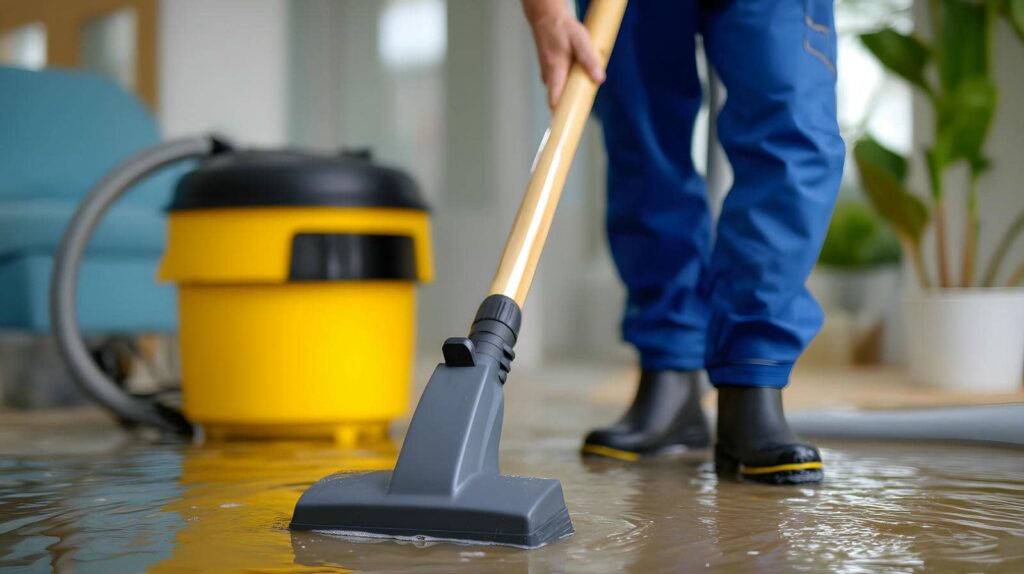
Start by activating your emergency response plan, ensuring your team knows their roles. Use submersible pumps to remove large volumes of standing water swiftly. If necessary, employ wet/dry vacuums for smaller areas and hard-to-reach spots.
Make sure to address waterlogged carpets and furniture promptly; these items can harbor mold and bacteria.
If your business has access to industrial-grade water extraction equipment, utilize it for enhanced efficiency.
Utilizing Industrial-Grade Dehumidifiers
Utilizing industrial-grade dehumidifiers is essential for enhanced moisture removal in flood-damaged areas.
These machines accelerate the drying process considerably, ensuring your business can resume operations quickly.
Additionally, their energy efficiency can help reduce operational costs during restoration.
Enhanced Moisture Removal
Effective moisture removal is essential for businesses recovering from flood damage, and industrial-grade dehumidifiers are among the most reliable solutions available.
These powerful machines excel at moisture detection and optimize air circulation throughout the affected areas. By continuously extracting excess humidity, they help prevent mold growth and structural damage, ensuring a safe environment for your employees and customers.
When employing these dehumidifiers, position them strategically to maximize airflow and enhance efficiency. Regular monitoring of humidity levels will allow you to assess progress and make necessary adjustments.
This proactive approach to moisture control is crucial in your restoration efforts, fostering a sense of security and belonging within your business community as you navigate the recovery process together.
Rapid Drying Process
After establishing solid moisture removal practices, the next step in flood damage restoration involves implementing a rapid drying process with industrial-grade dehumidifiers.
These powerful machines extract moisture from the air, considerably speeding up the drying time for affected areas.
To maximize efficiency, make sure you set up rapid air circulation throughout your space, utilizing fans alongside the dehumidifiers.
This combination enhances airflow, allowing moisture to evaporate more quickly.
Don’t forget to engage in moisture monitoring during this process; regularly check humidity levels to assess progress.
Energy Efficiency Benefits
While you focus on restoring your business after a flood, energy efficiency becomes a crucial consideration when using industrial-grade dehumidifiers.
These machines expedite the drying process and promote energy savings, greatly reducing your operational costs. By selecting models with high energy efficiency ratings, you align your restoration efforts with eco-friendly practices, reflecting a commitment to sustainability.
Utilizing advanced technology in these dehumidifiers allows you to maintain ideal humidity levels while consuming less power. This dual benefit supports your bottom line and reinforces your business’s reputation as an environmentally responsible entity.
Embracing energy-efficient solutions ensures your restoration process is both effective and mindful of resource use, fostering a sense of belonging in a community that values green initiatives.
Effective Mold Prevention Strategies
When it comes to preventing mold growth in your business, proactive measures are vital to maintaining a safe environment.
Start by implementing effective moisture control strategies. Regularly inspect areas prone to dampness, such as basements, bathrooms, and kitchens. Confirm proper ventilation to reduce humidity levels, using exhaust fans where necessary.
Invest in dehumidifiers to keep moisture at bay, particularly in humid climates. It’s also important to fix leaks immediately and address any water damage promptly.
Consider using mold-resistant materials for construction and renovations, which can greatly reduce mold growth potential.
Regularly clean and maintain HVAC systems to prevent mold spores from circulating throughout your space.
Lastly, educate your employees about the importance of reporting any signs of moisture or mold. By fostering a culture of vigilance and care, you’ll create a healthier workplace for everyone involved.
Structural Drying Methods
Effective structural drying methods are essential for restoring your business after a flood. To achieve ideal results, start with moisture mapping to identify problem areas. This technique allows you to pinpoint the most affected zones, ensuring no hidden moisture remains, which could lead to further damage.
Next, employ thermal imaging to detect temperature variations that indicate moisture presence within walls and ceilings. This advanced technology helps you visualize where drying efforts should be concentrated.
Once you’ve identified these areas, use high-capacity air movers and dehumidifiers to facilitate rapid drying. Position air movers strategically to create airflow, while dehumidifiers extract excess moisture from the air, preventing mold growth and structural damage.
Sanitizing and Disinfecting Affected Areas
After addressing structural drying, it’s vital to focus on sanitizing and disinfecting affected areas to prevent health hazards.
Effective disinfection techniques and the right products are essential for eliminating pathogens and ensuring a safe environment.
Prioritizing sanitization protects your employees and safeguards your business’s reputation.
Importance of Sanitization
Sanitizing and disinfecting affected areas is essential for businesses recovering from flood damage, as lingering contaminants can pose health risks and lead to further property damage.
Implementing effective sanitization protocols safeguards your employees and customers and protects your business’s reputation. Contaminated surfaces can harbor harmful bacteria and viruses, which can compromise health safety.
By prioritizing thorough sanitization, you’ll create a healthier environment that fosters trust and belonging among your team and clientele. It’s imperative to follow industry standards and utilize appropriate cleaning agents to ensure all affected areas are properly treated.
Effective Disinfection Techniques
To ensure a thorough recovery from flood damage, businesses must implement targeted disinfection techniques that eliminate harmful pathogens and contaminants.
Start by evaluating affected areas and choosing effective chemical disinfection agents that meet your specific needs. These agents can effectively neutralize bacteria and viruses, ensuring a safer environment.
Consider incorporating UV sterilization methods as well; they offer a non-chemical approach to disinfecting surfaces and can be particularly useful for hard-to-reach areas.
Combine these strategies for maximum effectiveness, ensuring that all surfaces, equipment, and materials are addressed.
After disinfection, always verify the results to confirm that the area is sanitized and safe for use. Taking these steps fosters a healthier space for employees and customers alike.
Choosing Appropriate Products
Choosing the right products for sanitizing and disinfecting affected areas is essential for effective flood damage restoration. Start by establishing clear product selection criteria, focusing on efficacy against bacteria and mold, safety for occupants, and compatibility with surfaces.
Look for eco-friendly options that minimize environmental impact while ensuring thorough disinfection. Products containing natural ingredients or certified green labels often meet these criteria.
Evaluate the specific needs of your business, as different areas may require specialized solutions. Always read labels to confirm the product meets health standards and follow manufacturer instructions for best results.
Restoration of Damaged Materials
Restoring damaged materials after a flood requires a systematic approach to ensure safety and effectiveness.
Begin with a thorough material assessment to identify which items can be salvaged and which need replacement. Focus on prioritizing the most critical materials, such as structural components, electronics, and furnishings, to ascertain business continuity.
Once you’ve assessed the damage, employ appropriate restoration techniques. For porous materials like drywall and carpets, drying and dehumidification are essential. Use specialized equipment to accelerate the drying process and prevent mold growth.
Non-porous materials, such as metal and glass, may only need cleaning and sanitization.
Implementing Flood Barriers and Drainage Solutions
To protect your business from future flooding, it’s essential to implement effective flood barriers and drainage solutions.
You’ll want to explore various types of barriers that suit your property and establish a robust drainage system to manage excess water.
Regular maintenance and inspection of these systems will help ensure their reliability when you need them most.
Types of Flood Barriers
When floodwaters threaten your business, implementing effective flood barriers and drainage solutions becomes essential for minimizing damage.
You can choose between temporary flood barriers, which are quick to deploy and ideal for short-term protection, and permanent barriers, designed for long-term resilience.
Temporary options, like inflatable dams or sandbags, can be quickly set up prior to an anticipated flood. On the other hand, permanent barriers, such as concrete walls or levees, offer robust protection against recurring flood events.
Both types require proper installation and maintenance to ensure effectiveness.
Assess your business’s unique needs and local flood risks to determine the best solution, assuring your property remains safe and operational during adverse weather conditions.
Effective Drainage Systems
While flood barriers are essential for immediate protection, effective drainage systems play an important role in managing water flow and minimizing damage during and after a flood.
To achieve ideal drainage design, consider installing systems that direct water away from your property. Use a combination of French drains, catch basins, and sump pumps to efficiently channel excess water.
Additionally, verify that your drainage solutions are regularly evaluated and adjusted according to your business’s unique needs. Implementing permeable paving can also enhance water absorption, reducing runoff.
Maintenance and Inspection Tips
Regular maintenance and inspection of flood barriers and drainage solutions are essential for ensuring their effectiveness.
To protect your business, implement a schedule for routine inspections, checking for any wear or damage. Look for blockages, leaks, and signs of corrosion, as these can compromise your systems.
Preventive maintenance should include cleaning debris from drainage systems and ensuring that barriers are properly sealed and operational.
Consider investing in training for your staff to recognize potential issues early. Establishing a community among business owners can also provide support and share best practices.
Collaborating With Professional Restoration Services
To effectively manage flood damage, partnering with professional restoration services is essential for minimizing losses and ensuring a swift recovery. These experts conduct thorough risk assessments to identify vulnerabilities in your business, allowing for targeted interventions.
By collaborating with them, you gain access to specialized knowledge and advanced equipment that can expedite the restoration process.
Service coordination is crucial in these situations. Professionals streamline communication between all stakeholders, ensuring everyone is on the same page and actions are executed efficiently. This collaborative approach reduces downtime and helps you resume operations as quickly as possible.
Choosing to work with experienced restoration specialists fosters a sense of community and support during challenging times. You’ll benefit from their expertise while contributing to a collective effort to rebuild and strengthen your business environment.
In doing so, you’re not just recovering; you’re enhancing your resilience against future flooding incidents.
Developing a Comprehensive Flood Response Plan
Developing a thorough flood response plan is essential for businesses to mitigate risks and ensure swift recovery in the aftermath of a flood. Start by evaluating your facility’s vulnerabilities and identifying critical assets. Confirm that your plan includes a clear communication strategy, detailing how to alert employees and stakeholders during a flood event.
Next, establish an emergency preparedness team responsible for coordinating response efforts. This team should regularly conduct training sessions and drills to familiarize everyone with their roles.
Additionally, create a list of emergency contacts, including local authorities and restoration services, to expedite response times.
Finally, regularly review and update your flood response plan to reflect any changes in your business environment or local regulations. By prioritizing these steps, you’ll foster a culture of resilience, ensuring your team feels secure and prepared to tackle any flooding challenges that may arise.
Frequently Asked Questions
How Can I File an Insurance Claim for Flood Damage?
Review your insurance policy for flood coverage details, gather necessary documentation, and start the claim process by contacting your insurer. They’ll guide you through the steps to ensure you receive the assistance you need.
What Should I Do Before Restoration Professionals Arrive?
Before restoration professionals arrive, you should conduct initial assessments to identify damage and prioritize emergency preparations. Document everything with photos, secure valuables, and ensure safety to facilitate a smoother restoration process later.
How Long Does the Flood Restoration Process Typically Take?
The restoration timeline usually spans several days to weeks, depending on damage severity. To minimize business disruptions, you should act quickly, coordinate with professionals, and prepare for potential delays in the process.
Are There Government Grants Available for Flood Damage Recovery?
Yes, you can access government assistance for flood damage recovery through disaster relief programs. Research local and federal options to find grants that suit your needs, ensuring you’re well-supported during the recovery process.
How Can I Prevent Future Flooding in My Business?
To prevent future flooding in your business, consider that much flood damage is preventable. Invest in effective drainage systems and install flood barriers to safeguard your property and ensure a secure environment for your operations.
Final Thoughts
In the face of flood damage, swift action is your lifeline. By implementing these ten restoration methods, you’re not just mopping up water; you’re fortifying your business against future storms. Each technique serves as a building block, crafting a resilient fortress that protects your operations and assets. Embrace a proactive approach, collaborate with professionals, and develop a robust response plan. With these strategies in place, you’ll turn the tide on disaster, ensuring your business can weather any storm.